HR Payroll Software: Complete Guide for Businesses (2026)
Payroll errors, delayed salaries, and compliance issues are still common in many businesses, especially small and growing ones.
The main reason? Manual processes and a lack of structured systems.
Many companies still rely on spreadsheets or outdated tools, which leads to mistakes, wasted time, and employee dissatisfaction.
This is where HR payroll software becomes a game-changer for modern businesses.
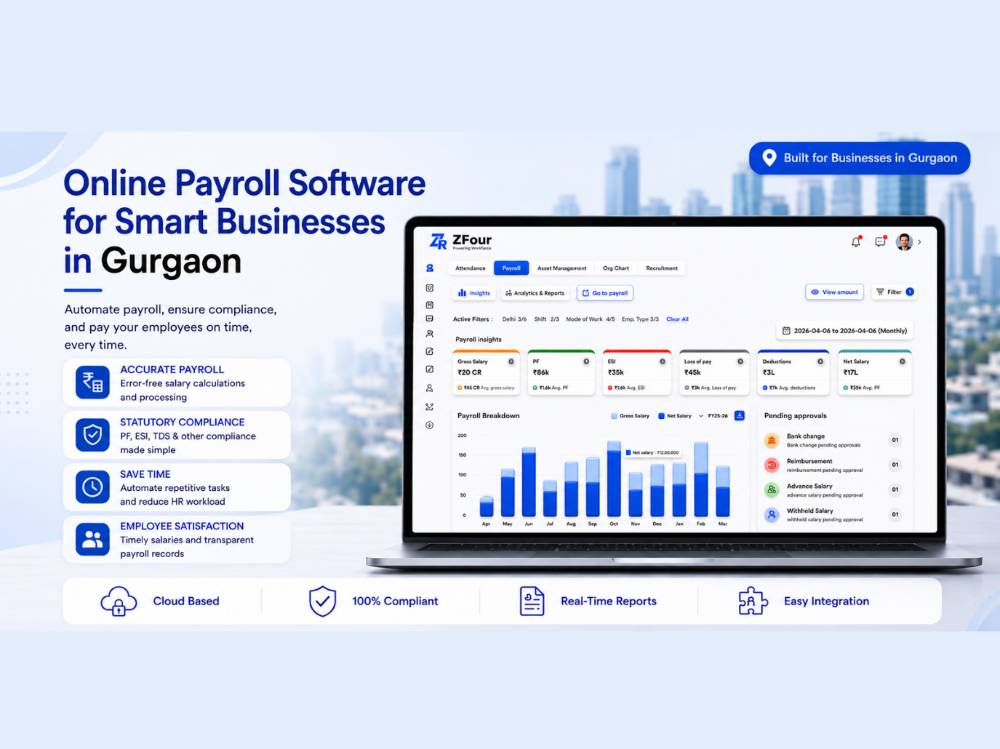
It not only automates salaries but also ensures compliance, accuracy, and business scalability—helping companies manage payroll efficiently in one place.
What is HR Payroll Software?
HR payroll software is a system that helps businesses manage employee payroll, salary processing, tax deductions, and compliance efficiently.
It combines HR and payroll functions into a single platform, allowing companies to automate operations, reduce manual workload, and improve accuracy.
It helps businesses eliminate manual effort while ensuring accurate, timely, and compliant payroll processing.
Why Businesses Need HR Payroll Software
Many businesses underestimate the impact of poor payroll management.
Common problems include:
Incorrect salary calculations
Delayed payments
Compliance issues
Time-consuming manual work
Payroll software helps businesses streamline operations, reduce risks, and improve overall efficiency.
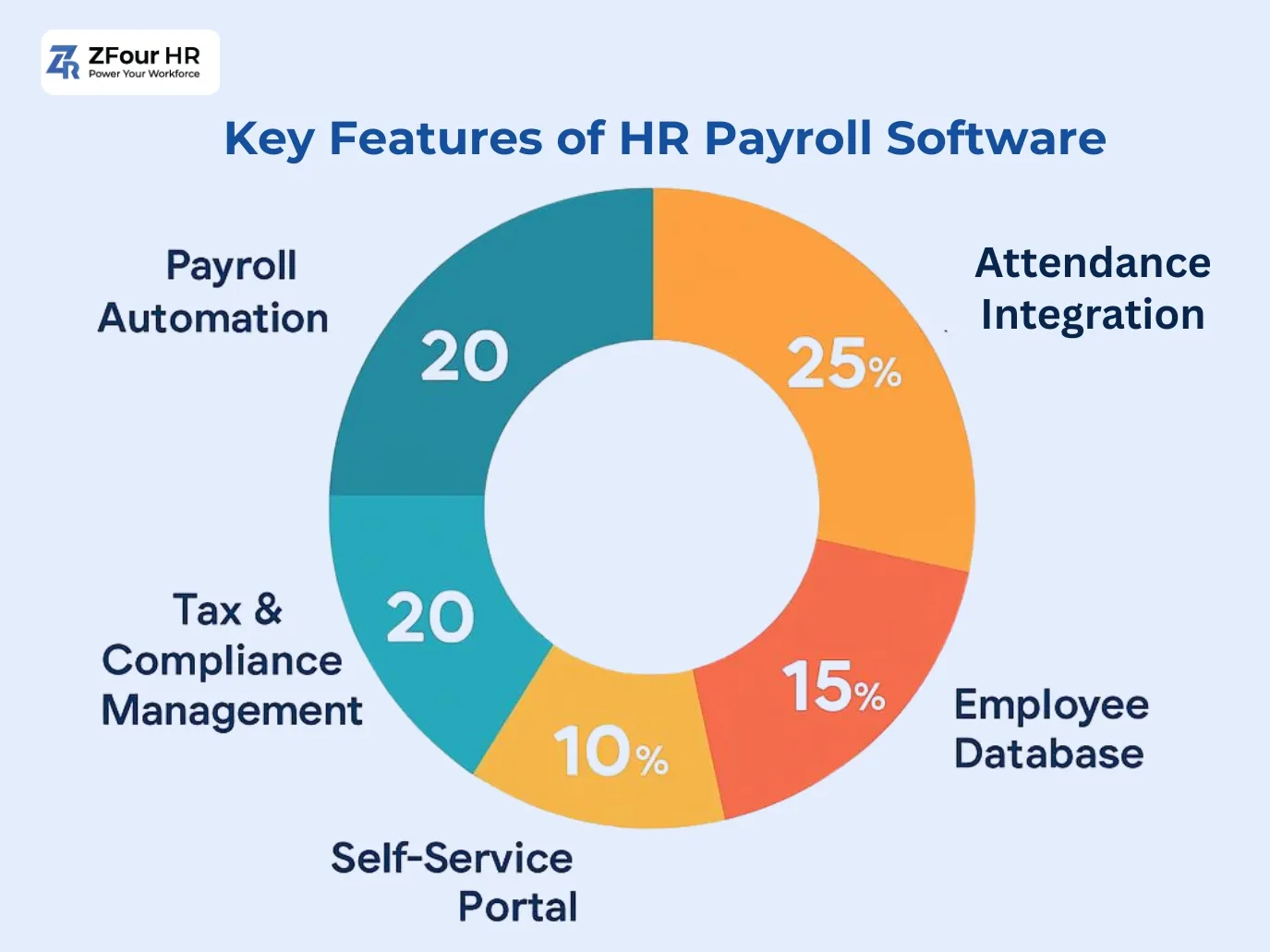
Key Features of HR Payroll Software
Core Features:
Payroll automation
Attendance integration
Tax and compliance management
Employee database
Reporting and analytics
Self-service portals
HR Payroll Software Features
Below is a detailed breakdown of how these features benefit businesses:
Feature | What It Does | Business Benefit |
Payroll Automation | Calculates salaries automatically | Reduces errors |
Attendance Integration | Syncs attendance data | Accurate payroll |
Compliance Management | Handles tax & legal rules | Avoids penalties |
Employee Database | Stores employee data | Easy access |
Reporting & Analytics | Generates reports | Better decisions |
Self-Service Portal | Employee access | Improves transparency |
Types of HR and Payroll Systems
Businesses use different systems depending on their needs:
HRMS software – Complete HR solution
Payroll software – Salary processing only
Payroll management system – Automation focused
HR system software – HR operations
Human resource software – General HR management
Choosing the right system depends on business size, complexity, and automation needs.
HR Payroll Software vs Manual Payroll
Factor | Manual Payroll | HR Payroll Software |
Accuracy | Low | High |
Time Required | High | Low |
Error Risk | High | Minimal |
Compliance | Difficult | Automated |
Scalability | Limited | High |
Manual systems may work initially, but they become inefficient as businesses grow.
This clearly shows why businesses are rapidly shifting toward automated payroll solutions.
What is Payroll Management System?
A payroll management system automates salary calculations, tax deductions, and compliance processes.
It ensures:
Accurate salary processing
Timely payments
Compliance with tax laws
This reduces manual work and improves efficiency.
Cost of Payroll Errors in Businesses
Payroll mistakes can have serious consequences.
When errors occur:
Employees lose trust
HR teams spend extra time fixing issues
Businesses face compliance risks
Even small errors can lead to financial penalties or employee dissatisfaction.
Automated payroll systems help businesses prevent these issues proactively.
Pricing of HR Payroll Software (India)
Plan | Price (Per Employee) | Best For |
Basic | ₹50–₹100 | Startups |
Standard | ₹100–₹200 | Small businesses |
Advanced | ₹200–₹300 | Growing companies |
Choosing the right plan depends on your business needs and scale.
How HR Payroll Software Works
The process is simple and efficient:
Employee data is entered
Attendance is tracked
Payroll is calculated
Taxes are deducted
Payslips are generated
This streamlined workflow ensures accuracy, speed, and compliance in every payroll cycle.
Payroll Process Flow
Step | Process |
1 | Employee data input |
2 | Attendance tracking |
3 | Salary calculation |
4 | Tax deduction |
5 | Payslip generation |
Benefits of HR Payroll Software
Key advantages of using payroll software include:
Saves time
Reduces errors
Ensures compliance
Improves employee satisfaction
Supports business growth
Instead of managing problems, businesses can focus on growth.
Signs Your Business Needs HR Payroll Software
If your business faces these issues, it’s time to upgrade:
Frequent payroll errors
Delayed salaries
Heavy reliance on spreadsheets
HR team overloaded
Compliance confusion
If you relate to any of these, it’s time to upgrade your payroll system.
To understand payroll regulations, businesses can refer to official guidelines from the Income Tax Department of India.
Industry Use Cases
Industry | Use Case |
IT | Manage remote teams |
Startups | Automate HR processes |
SMEs | Handle compliance |
Manufacturing | Track shifts |
Agencies | Manage payroll |
Integration with HRMS and Other Tools
HR payroll software works best when integrated with:
HRMS systems
Attendance tools
Accounting software
This ensures:
Seamless data flow
Accurate payroll
Better reporting
Integration ensures all HR operations work seamlessly without manual intervention.
Data Security in HR Payroll Software
Security is critical for handling employee data.
Modern systems offer:
Data encryption
Secure cloud storage
Access control
This is crucial for protecting sensitive employee and financial data.
Step-by-Step Implementation Guide
Implementing payroll software is simple when done step-by-step:
Identify business needs
Choose the right software
Upload employee data
Configure payroll settings
Train employees
Go live
Common Payroll Mistakes Businesses Make
Many companies struggle with:
Incorrect salary calculations
Tax errors
Delayed payments
Poor record keeping
These issues affect trust and efficiency.
Future of HR Payroll Software
The future of payroll is driven by technology and automation:
Trend | Impact |
AI payroll | Faster processing |
Cloud systems | Remote access |
Automation | Less manual work |
Mobile HR | Easy management |
Conclusion
HR payroll software is no longer optional—it’s a necessity for businesses aiming to scale efficiently.
By automating payroll, ensuring compliance, and reducing errors, it allows businesses to focus on growth instead of operational challenges.
Upgrade to a smarter solution with ZFour HRMS and simplify payroll, compliance, and workforce management—all in one platform.