Payroll Compliance in India 2026: Complete Guide to PF, ESI, Wages & HR Rules
Last Updated: April 2026
Managing payroll in India has become more complex than ever. In 2026, businesses are expected to process salaries accurately while also handling Provident Fund (PF), Employees’ State Insurance (ESI), minimum wages, attendance records, leave deductions, labour law updates, documentation, and employee compliance requirements.
For startups and growing businesses, payroll mistakes can lead to penalties, employee dissatisfaction, delayed salaries, and trust issues. For larger companies, errors become more expensive and harder to control.
That is why payroll compliance is now a core business function rather than just an HR task.
This complete guide explains payroll compliance in India in simple language.
Whether you run a startup, SME, agency, factory, retail business, or multi-location company, this article will help you understand the essentials.
What is Payroll Compliance in India?
Payroll compliance means following all applicable salary, labour, tax, and employee-related rules while paying employees.
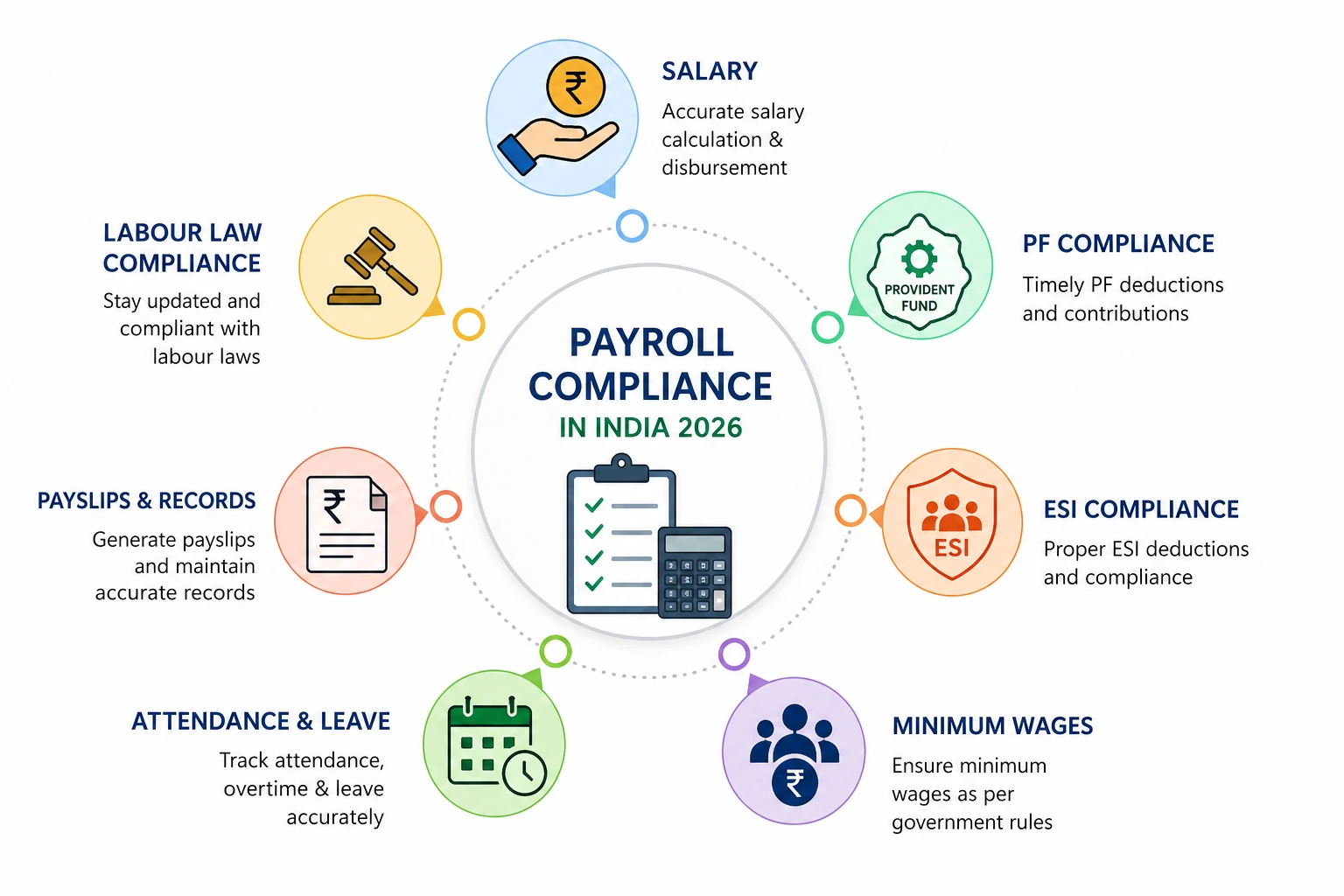
It includes:
Correct salary calculations
Timely salary disbursement
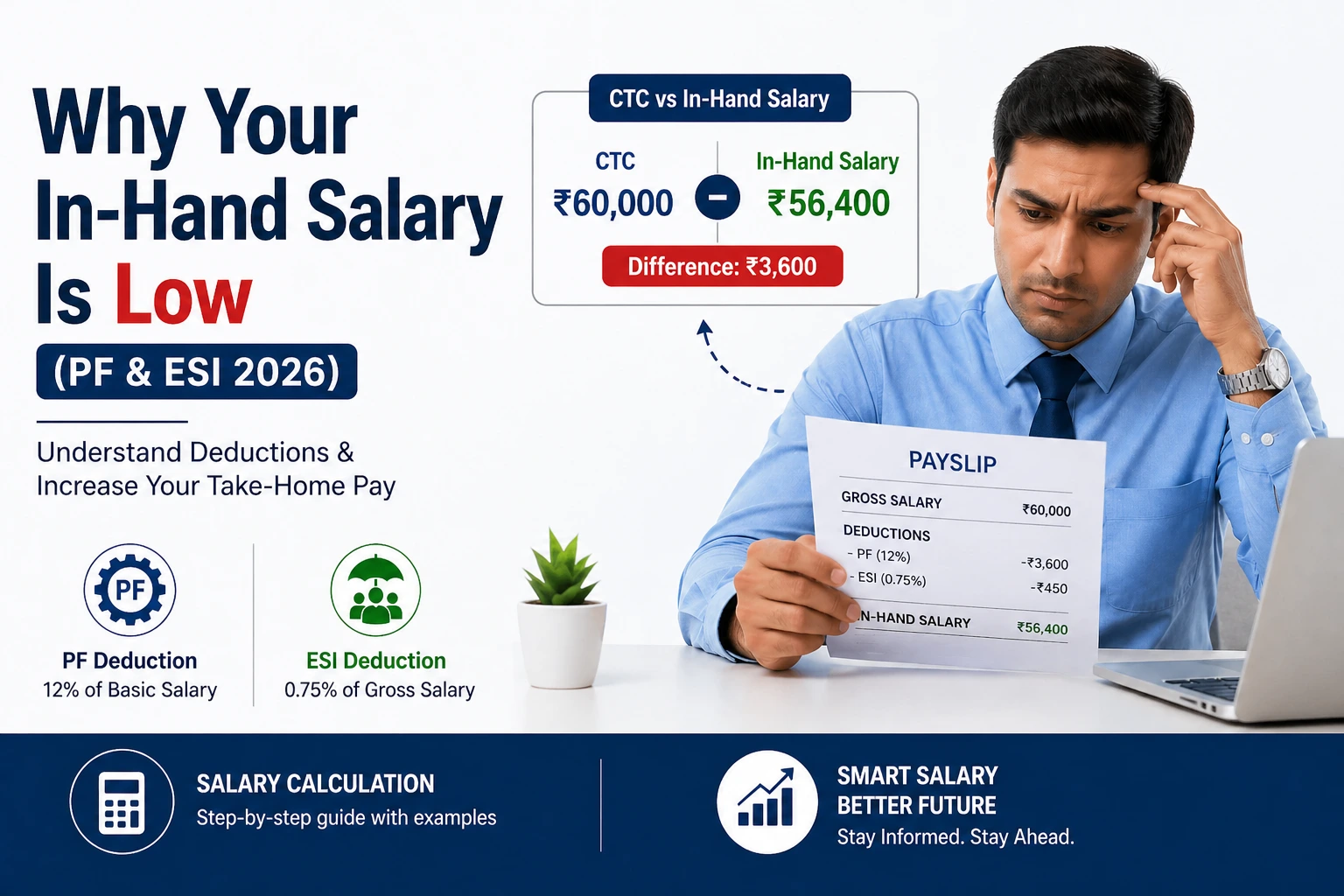
PF deductions and contributions
ESI deductions and compliance
Minimum wage adherence
Attendance and overtime records
Leave adjustments
Payslips and documentation
Employee records management
HR policy alignment
Payroll compliance ensures that a business pays employees fairly, follows regulations, and maintains organized records.
Why Payroll Compliance Matters in 2026
Indian businesses are changing rapidly. Many companies now hire remote teams, field staff, contract workers, and employees across multiple states. This increases payroll complexity.
Common problems businesses face include:
Wrong salary deductions
Late salary processing
Incorrect PF or ESI calculations
Outdated wage rates
Manual attendance errors
Poor record keeping
No approval workflows
Multi-state payroll confusion
When payroll systems are weak, business operations suffer.
A compliant payroll process improves trust, saves time, and reduces risk.
Key Components of Payroll Compliance in India
1. Salary Structure Management
Every employee salary should have a clear structure. This often includes:
Basic salary
House Rent Allowance (HRA)
Special allowance
Incentives
Bonuses
Statutory deductions
Poor salary structure planning can affect PF, taxes, gratuity, and employee expectations.
Businesses should regularly review salary components.
2. Minimum Wages Compliance
Employers must ensure employees receive wages that meet applicable minimum wage requirements.
Minimum wages may vary by:
State
Skill level
Industry category
Worker type
Businesses with teams across multiple states should review wage rates carefully.
Related resources:
Minimum Wages India State Wise Salary List 2026
Delhi Minimum Wages 2026 Latest Salary Rules Guide
Basic Salary in Noida 2026 Complete Guide
3. Provident Fund (PF) Compliance
PF is one of the most important payroll responsibilities for many employers.
PF management usually includes:
Employee contribution deductions
Employer contribution processing
Timely deposits
Correct wage basis
Updated employee records
Common PF mistakes:
Wrong deduction basis
Missing employee details
Delayed deposits
Poor documentation
Proper PF management builds employee confidence and avoids unnecessary issues.
4. Employees’ State Insurance (ESI)
ESI supports eligible employees through healthcare and related benefits.
Businesses should ensure:
Correct eligibility handling
Accurate deductions
Timely compliance processes
Employee awareness
Related guide:
How to Calculate PF and ESI on CTC in India 2026
5. Attendance & Leave Integration
Payroll should connect with attendance systems.
Without attendance integration, businesses face:
Wrong working days
Overtime disputes
Leave deduction errors
Manual reconciliation delays
Modern payroll systems reduce these issues through automation.
6. Payslips & Documentation
Employees expect clear monthly payslips.
Good payroll systems should provide:
Gross salary
Deductions
Net salary
Leave adjustments
Attendance summary
Company records
Payslip transparency improves trust.
7. Labour Code Readiness
Labour reforms and wage structure changes can impact payroll processes.
Businesses should monitor:
Wage definitions
Basic pay structures
Gratuity impact
PF calculation basis
Policy changes
Related guides:
India Labour Codes 2026 Impact on Salary, PF, ESI & Gratuity
India Labour Codes 2026: 50 Percent Basic Pay Rule
Payroll Compliance Challenges for Growing Businesses
1. Manual Spreadsheet Dependency
Many SMEs still manage payroll in spreadsheets. This often creates:
Formula errors
Version confusion
Missing approvals
Delayed calculations
2. Multi-State Teams
Different states may have different wage structures and operational rules.
3. Last-Minute Changes
Late attendance corrections or salary changes delay payroll closure.
4. Lack of HR Systems
Without centralized systems, records become scattered.
Payroll Compliance for Small Businesses
Small businesses often assume payroll compliance is only for large companies. That is incorrect.
Even small businesses benefit from:
Clear salary records
Professional payroll systems
Better employee trust
Organized documentation
Easier future scaling
As businesses grow from 10 to 50 to 100 employees, payroll complexity rises quickly.
Multi-State Payroll in India
If your company hires employees in multiple locations, payroll management becomes more challenging.
Common issues:
Different wage expectations
Remote attendance tracking
Policy standardization
Documentation gaps
Team expansion complexity
A centralized payroll platform helps simplify operations.
Related guide:
Multi-State Payroll Compliance India: The 2026 Reality
Monthly Payroll Compliance Checklist
Use this checklist every month:
✅ Attendance finalized
✅ Leave approved
✅ Salary revisions updated
✅ Employee records checked
✅ PF reviewed
✅ ESI reviewed
✅ Payslips generated
✅ Final approvals completed
✅ Reports stored
✅ Salary released on time
Common Payroll Mistakes Employers Should Avoid
1. Wrong Attendance Inputs
Unapproved attendance leads to wrong salaries.
2. Delayed Payroll Processing
Late salaries damage morale.
3. Ignoring Wage Updates
Minimum wage changes must be monitored.
4. Poor Employee Communication
Employees should understand salary breakup and deductions.
5. No Audit Trail
Every payroll change should be trackable.
How to Improve Payroll Accuracy
Use Standard Timelines
Create monthly deadlines for:
Attendance freeze
Leave closure
Salary review
Payroll processing
Payslip release
Maintain Updated Employee Data
Keep records current for:
Bank details
Salary changes
Designation updates
Joining dates
Leave balances
Review Reports Before Release
Always verify payroll before salary disbursement.
Why Businesses Use HRMS for Payroll Compliance
Modern HRMS software helps automate repetitive payroll tasks.
Benefits include:
Attendance-linked payroll
Faster calculations
Leave integration
Payslip generation
Reports and dashboards
Employee self-service
Better record management
Approval workflows
Automation reduces manual risk.
How ZFour Helps Growing Businesses
ZFour is an HRMS and workforce management platform designed for modern businesses.
It can support:
Payroll workflows
Attendance management
Leave approvals
Shift planning
Employee operations
Reports
HR organization
Businesses moving away from spreadsheets often need a practical system that scales with growth.
Signs Your Business Needs Better Payroll Systems
You may need an upgrade if:
Payroll takes too long every month
Employees question salary errors
Leave deductions are confusing
Reports are hard to generate
Records are scattered
HR spends too much time manually processing data
Payroll Compliance Best Practices for 2026
Standardize salary policies
Automate repetitive tasks
Review records monthly
Keep employee data updated
Improve payslip clarity
Use dashboards for oversight
Build approval workflows
Stay informed on compliance changes
Payroll Process in India: Step-by-Step Guide
A structured payroll process helps businesses avoid mistakes and improve monthly efficiency. Most growing companies follow a monthly payroll cycle.
Step 1: Attendance Collection
Collect final attendance data including:
Present days
Absences
Paid leave
Overtime
Shift records
Late marks (if policy applies)
Step 2: Salary Adjustments
Update any monthly changes such as:
New joiners
Resignations
Salary revisions
Incentives
Bonuses
Reimbursements
Step 3: Statutory Deductions
Review PF, ESI, and other applicable deductions based on salary structure and eligibility.
Step 4: Payroll Review
Before processing salaries, verify totals, deductions, and employee records.
Step 5: Salary Disbursement
Release salaries on the scheduled payroll date.
Step 6: Payslips & Reports
Generate payslips and save payroll reports for internal records.
A clear payroll workflow reduces delays and confusion.
Manual Payroll vs HRMS Payroll
Many businesses begin with spreadsheets, but growing teams often need better systems.
Area | Manual Payroll | HRMS Payroll |
Attendance Input | Manual | Automated |
Salary Calculation | Time-consuming | Faster |
Errors | Higher risk | Lower risk |
Payslips | Manual sharing | Instant |
Reports | Slow | Real-time |
Scaling Teams | Difficult | Easier |
For businesses with expanding teams, HRMS software often improves speed and accuracy.
Payroll Compliance Challenges for SMEs in India
Small and medium businesses often face unique payroll issues.
Limited HR Staff
One person may manage HR, payroll, attendance, and hiring together.
Frequent Policy Changes
Businesses may struggle to track wage updates or internal changes.
Manual Records
Important employee data may remain scattered in spreadsheets or files.
Growth Pressure
As employee count rises, monthly payroll becomes more complex.
This is why many SMEs adopt payroll software earlier than expected.
How Payroll Errors Affect Businesses
Payroll mistakes impact more than salaries.
Employee Trust Issues
Repeated errors can create frustration and lower morale.
HR Productivity Loss
Teams spend extra time correcting old mistakes.
Delayed Decision-Making
Without proper payroll reports, management lacks visibility.
Reputation Risk
A business known for poor payroll discipline may struggle with retention.
Best Practices for Payroll in 2026
Use these practical habits:
Freeze attendance on a fixed date each month
Standardize leave approvals
Review salary changes before payroll day
Keep employee records updated
Use approval workflows
Share payslips on time
Maintain monthly payroll reports
Use HRMS automation where possible
Final Thoughts
Payroll compliance in India in 2026 requires more than salary transfers. It requires systems, accuracy, records, communication, and readiness for growth.
Businesses that organize payroll early create stronger employee trust, smoother operations, and lower long-term risk.
As companies scale, payroll excellence becomes a competitive advantage.
If your business still depends on fragmented manual systems, this is the right time to modernize payroll operations with smarter HRMS software like ZFour.