Payroll Management: Benefits of Real-Time Processing

In today’s hyper-competitive business environment, agility and employee satisfaction are crucial. Traditional payroll cycles, with their rigid bi-weekly or monthly schedules, are becoming outdated.
Forward-thinking organizations are now adopting real-time payroll systems. These systems unlock operational efficiency, enhance financial wellness, and boost workforce productivity.
Why Payroll Management Needs Real-Time Processing
Real-time processing enhances payroll accuracy, streamlines HR workflows, and improves employee financial wellness, creating a future-ready payroll system.
Real-time payroll refers to processing and disbursing employee wages as they are earned, instantly or on demand.
Businesses no longer wait for conventional pay cycles. By leveraging automation, cloud computing, and integrated financial platforms, companies can deliver earned wages directly to employees' accounts without delay.
This shift revolutionizes how organizations manage compensation. It empowers employees with financial flexibility and positions businesses as attractive employers in the talent market.
Why Real-Time Payroll is a Game Changer
1. Enhanced Employee Financial Wellness and Satisfaction
Having immediate access to earned wages fosters financial empowerment. Employees no longer face the anxiety of waiting weeks for paychecks. This shift leads to reduced financial stress and better mental well-being. As a result, organizations see higher engagement, lower turnover rates, and a more motivated workforce.
2. Operational Efficiency and Accuracy
Automating payroll in real-time eliminates manual batch processing. It minimizes errors caused by data duplication or delays. This efficiency significantly reduces the administrative burden on HR and finance teams. Consequently, resources can focus on strategic initiatives rather than getting bogged down in administrative tasks. Companies can keep up-to-date financial records, ensuring compliance and audit readiness.
3. Competitive Talent Acquisition and Retention
In today’s talent-driven market, offering real-time payroll serves as an attractive differentiator. It signals a commitment to employee-centric policies and modern financial management. This approach attracts top-tier candidates who value flexibility. Furthermore, existing employees are more likely to remain engaged and loyal, reducing turnover.
4. Seamless Integration with Financial Ecosystems
Real-time payroll solutions can integrate with platforms for expense management, benefits, tax systems, and even emerging fintech options like cryptocurrency payments. These integrations create an agile, end-to-end payroll ecosystem tailored to the evolving needs of organizations.
Key Technologies Powering Real-Time Payroll
To support real-time payroll operations, several technologies play a vital role:
- Cloud-Based Payroll Platforms: Scalable, secure, and accessible from anywhere.
- API-Driven Integrations: Connect HRMS, banking, and benefits systems in real-time.
- Automation & AI: Minimize human intervention, detect anomalies, and optimize payroll cycles.
- Blockchain & Crypto: Emerging technologies that provide transparent, cross-border payments.
ZFour HRMS: Empowering Organizations with Real-Time Payroll
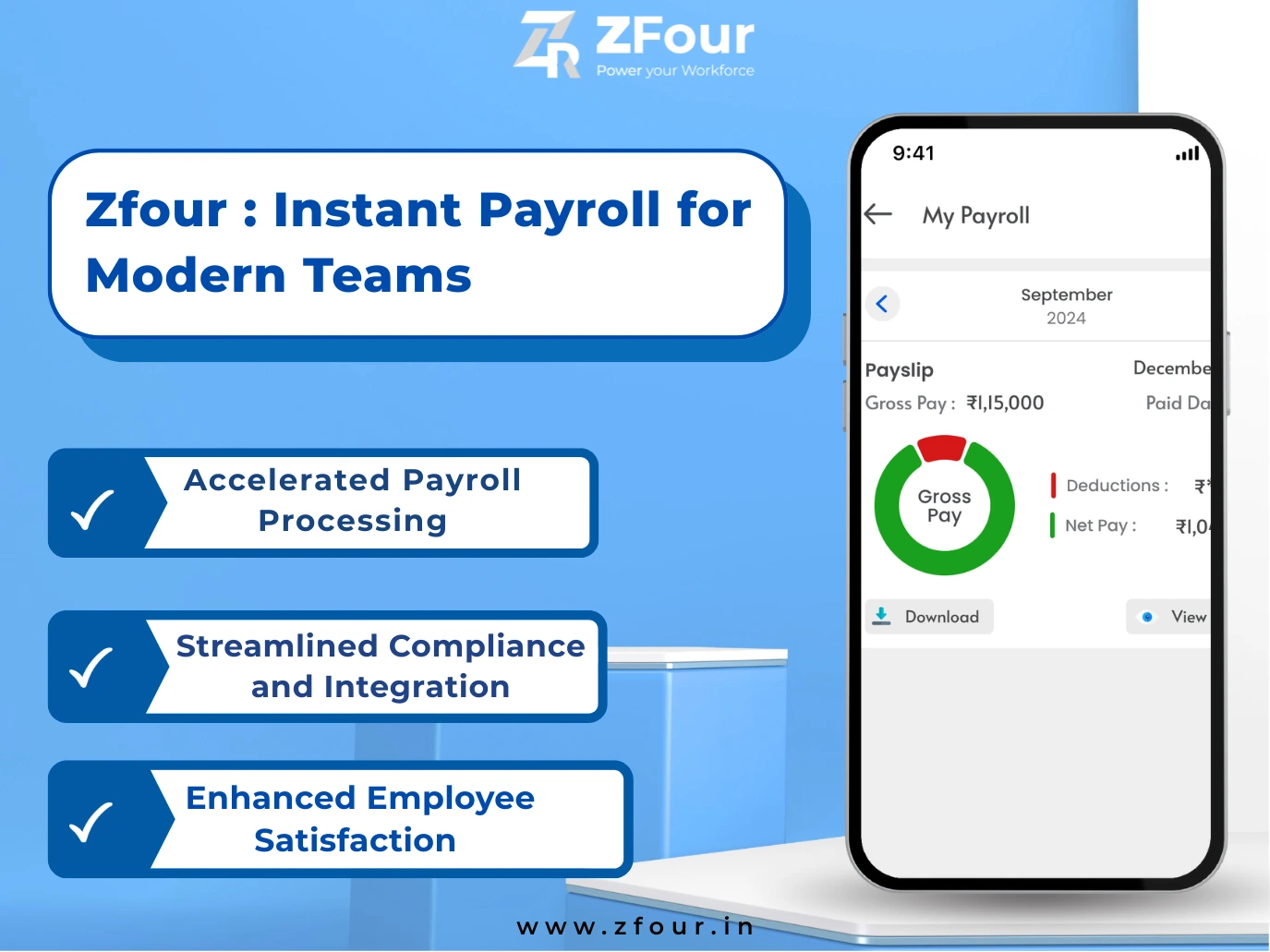
Leading the way in payroll innovation is ZFour HRMS, a next-gen human resource management system. It supercharges payroll agility and enhances employee satisfaction.
With ZFour, organizations can:
- Pay employees immediately based on actual hours worked or completed tasks.
- Automatically comply with changing tax laws and labor regulations.
- Provide payroll tracking dashboards for employees and managers.
- Scale the system easily for enterprises, mid-sized companies, and small businesses.
- Use a modular design that supports fintech tools and blockchain technology.
Discover how ZFour HRMS transforms payroll management and helps organizations prepare for the future.
Strategic Considerations for Real-Time Payroll Adoption
Transitioning to real-time payroll requires a strategic roadmap. Organizations should consider the following steps:
- Assess Current Payroll Workflows: Identify bottlenecks and manual dependencies.
- Select Scalable Technology: Choose platforms that offer API integration and automation.
- Engage Stakeholders: Align HR, finance, IT, and compliance teams for a smooth transition.
- Pilot and Iterate: Launch the system with targeted employee segments before a full rollout.
- Ensure Security & Compliance: Maintain data privacy, audit trails, and adherence to legal standards.
Conclusion
Real-time payroll is more than an operational upgrade. It is a transformative business strategy that aligns compensation with modern expectations for speed, transparency, and flexibility.
Organizations that embrace this evolution unlock superior employee satisfaction, streamline their financial operations, and gain a competitive advantage.
Empower your payroll operations with ZFour HRMS — the nexus of innovation and workforce excellence.