Real-Time Location Tracking for Employees: Benefits & Best Tools
Real-Time Location Tracking for Employees: Benefits & Best Tools Explained
Managing distributed teams becomes easier when combined with a Time Tracking Software Online Guide, which helps businesses monitor work hours alongside employee location.
Because of this shift, real-time location tracking for employees has become an essential part of workforce management.
Organizations are not using tracking to control employees. Instead, they are using it to improve coordination, reduce delays, and create a more structured work environment.
In this guide, you will learn how real-time location tracking works, why it is important, the benefits it offers, and how businesses can use it effectively without making operations complicated.
What is Real-Time Location Tracking for Employees?
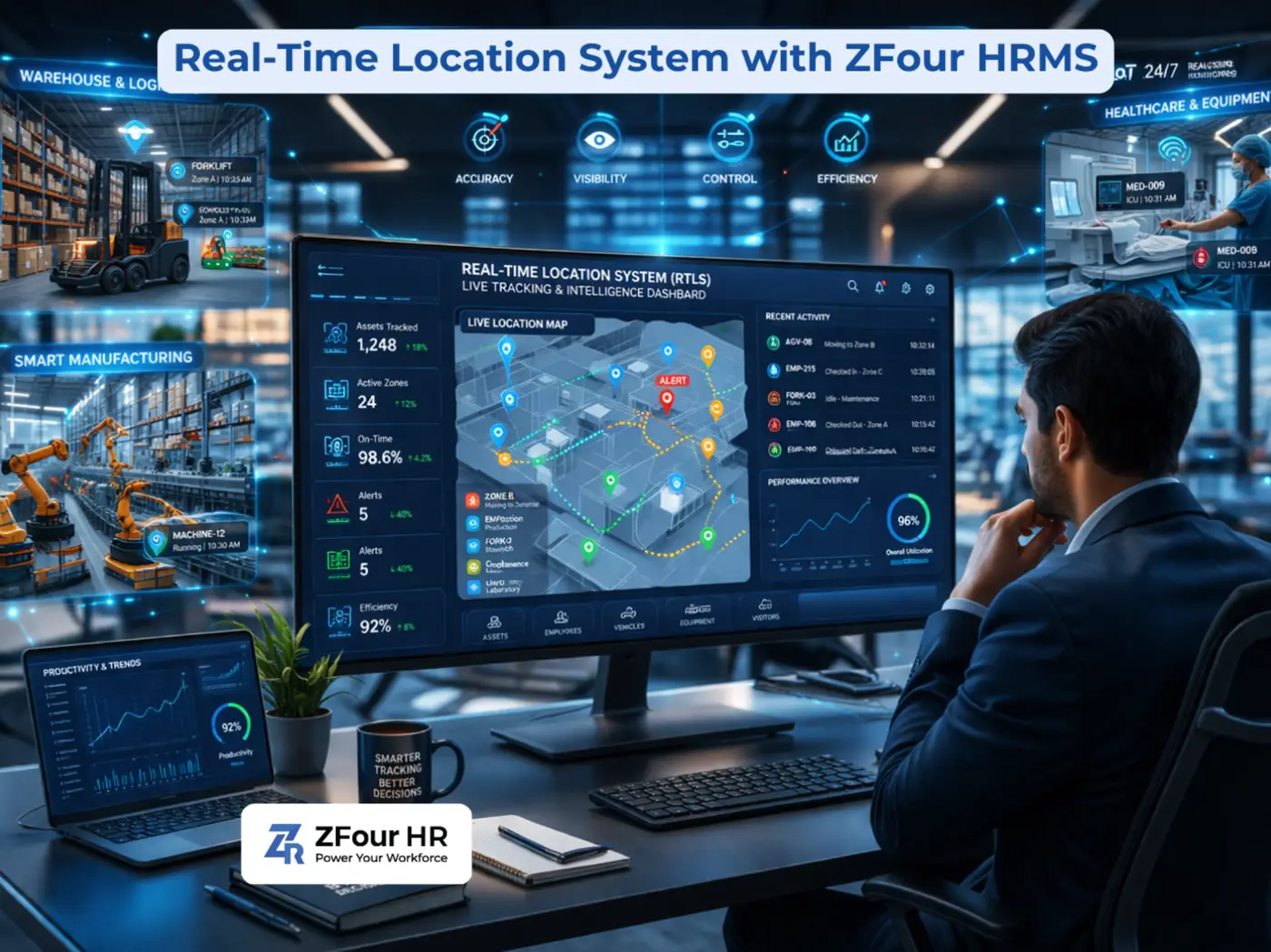
Real-time location tracking is a system that allows businesses to monitor employee location during working hours using GPS-enabled devices or mobile applications.
The system collects location data and displays it on a centralized dashboard, giving managers a clear view of employee movement and activity.
It helps answer important questions such as:
- Where is the employee currently working?
- How much time is spent on tasks?
- Are tasks being completed on schedule?
For a deeper understanding, you can explore:
Real-Time Locating System Explained
How Real-Time Location Tracking Improves Daily Workflow
In many organizations, managing daily operations becomes difficult when there is no real-time visibility. Managers often rely on updates, which may be delayed or incomplete.
With a real-time tracking system in place, daily workflow becomes more structured. Managers can view employee movement, task progress, and availability instantly.
This allows them to plan tasks more efficiently and reduce unnecessary communication.
For example, if an employee completes a task earlier than expected, the system immediately reflects their availability.
This makes it easier to assign new tasks without delay.
Over time, this creates a smoother workflow where work moves consistently without interruptions.
Why Businesses Are Adopting Real-Time Location Tracking for Employees
Modern workplaces face several challenges:
- Employees working across different locations
- Lack of visibility into daily operations
- Delays in communication
- Inefficiencies in manual tracking
In traditional systems, managers depend on calls, messages, or spreadsheets. As the team grows, these methods become less reliable and harder to manage.
Real-time tracking provides a structured approach where data is automatically recorded, helping businesses maintain accuracy without increasing workload.
Benefits of Real-Time Location Tracking for Employees
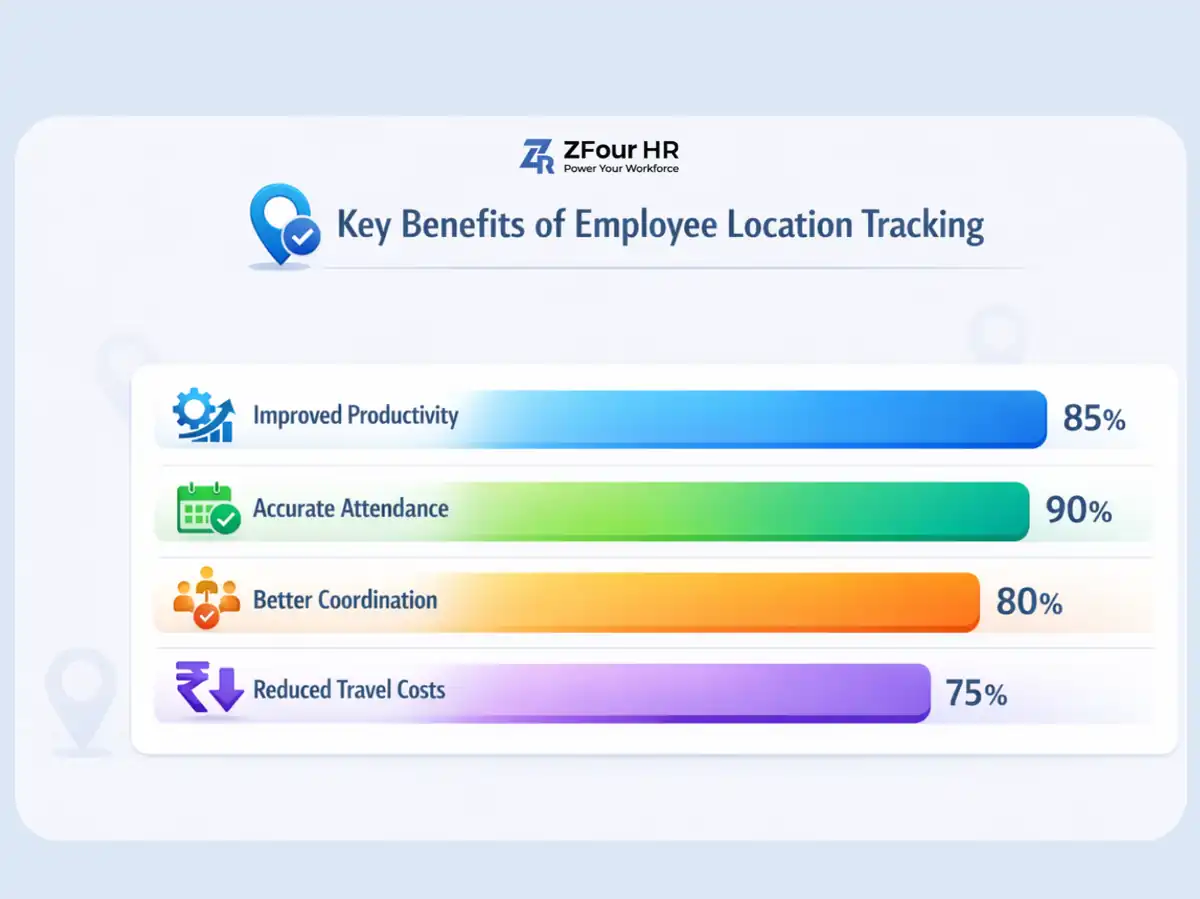
Improved Workforce Visibility
Managers can monitor employee locations without constant follow-ups. This creates a clear picture of daily activities and helps in better planning.
Increased Productivity
Employees tend to manage their time better when work is structured. Tasks are completed more efficiently, and unnecessary delays are reduced.
Faster Decision-Making
Real-time data allows managers to assign tasks instantly and respond to issues without waiting for updates.
Better Team Coordination
With centralized data, communication becomes more organized. Teams can stay aligned without repeated instructions.
Accurate Attendance and Work Hours
This is where an Attendance Management System plays an important role by ensuring that both attendance and location data remain accurate and synchronized.
Enhanced Employee Safety
In field-based roles, tracking helps ensure employee safety by allowing quick response in case of emergencies.
Benefits Comparison Table
Area | Without Tracking | With Real-Time Tracking |
Visibility | Limited | High |
Productivity | Unstructured | Improved |
Communication | Manual | Real-time |
Attendance | Error-prone | Accurate |
Decision Making | Slow | Fast |
Impact on Business Performance and Efficiency
Real-time location tracking does more than improve visibility. It directly impacts overall business performance.
When businesses have access to accurate data, they can:
- Identify delays in workflows
- Improve task allocation
- Reduce idle time
- Optimize team performance
Instead of depending on assumptions, decisions are based on real data. This reduces errors and improves operational efficiency.
In growing businesses, even small improvements in efficiency can lead to significant long-term benefits.
How Real-Time Location Tracking Works
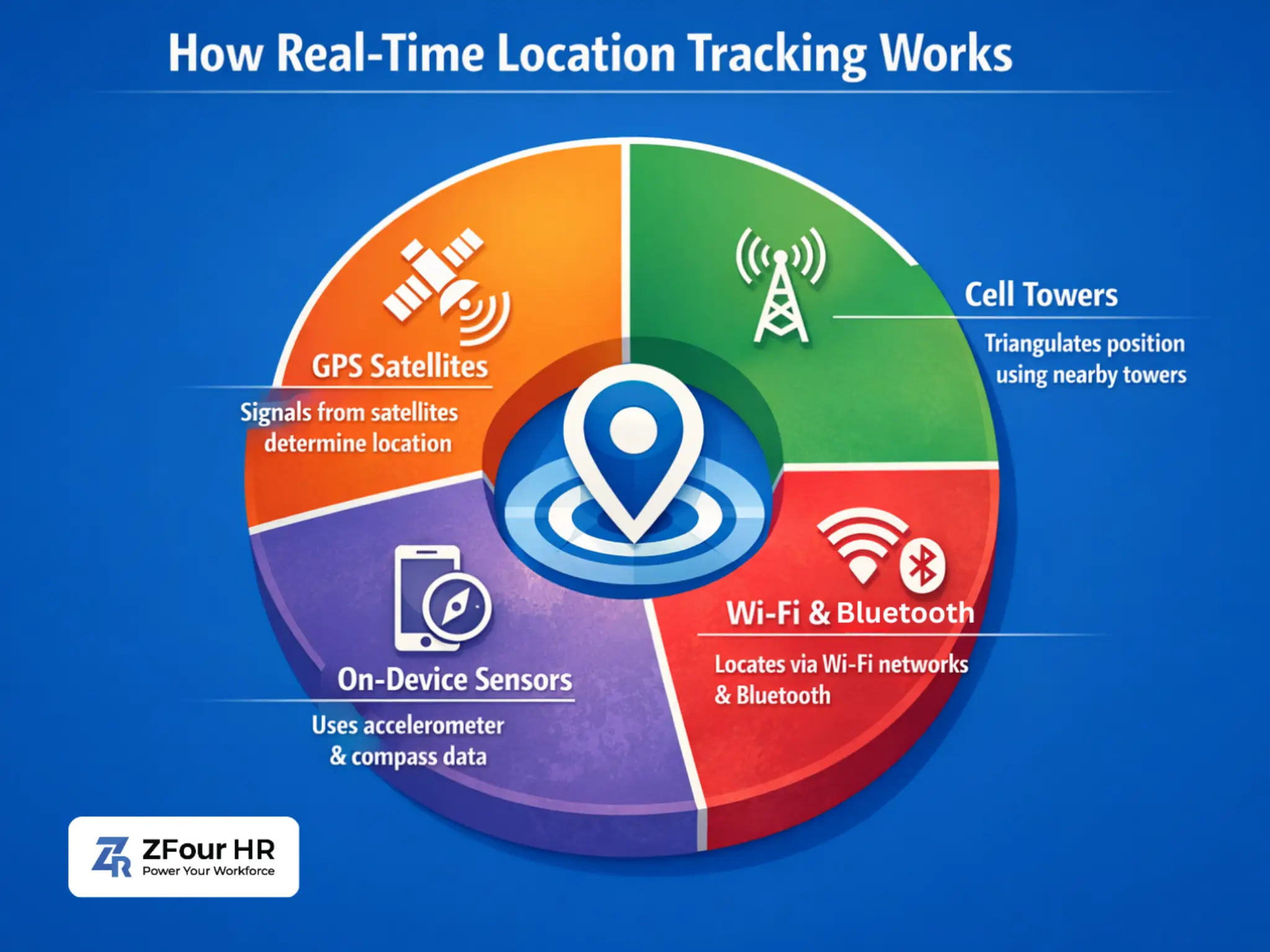
The system is designed to be simple and easy to use.
Workflow
- Employees log into a mobile application
- GPS tracks their location
- Data is updated in real time
- Managers monitor progress through a dashboard
Process Table
Step | Action |
Start | Employee logs in |
During Work | Location is tracked |
Progress | Data updated live |
End | Reports generated |
Role of Mobile Technology in Employee Tracking
Mobile technology plays a crucial role in making real-time tracking accessible and effective.
Most systems are designed as mobile applications, allowing employees to log in, update tasks, and share their location easily.
This makes the system flexible and suitable for both office and field employees.
Because smartphones are widely used, businesses do not need additional hardware.
This reduces implementation complexity and makes adoption easier.
Key Features to Look for in Tracking Software
Choosing the right system is important for long-term success.
Essential Features
- GPS-based tracking
- Mobile app access
- Real-time dashboard
- Attendance integration
Advanced Features
- Geofencing
- Route optimization
- Performance analytics
- Automated alerts
Industry Use Cases
Logistics and Delivery
Companies use tracking systems to manage delivery routes, reduce delays, and improve efficiency.
Healthcare
Hospitals track staff availability and manage shifts more effectively, improving response time.
Construction
Businesses monitor on-site workers and track working hours to ensure project timelines are maintained.
Sales Teams
Sales professionals use tracking to manage client visits and improve scheduling.
Real-Life Scenario
Before implementing tracking systems, managers often depend on phone calls and manual updates. This creates delays and reduces clarity.
After implementing tracking systems, managers gain real-time visibility. Tasks are assigned faster, and operations become more efficient.
This is where businesses begin to see a real impact, with clearer workflows and faster operations.
Challenges of Real-Time Location Tracking
Privacy Concerns
Employees may feel uncomfortable if tracking is not clearly explained.
Solution:
- Track only during working hours
- Maintain transparency
Technical Limitations
Issues such as GPS inaccuracies or network dependency may arise.
Solution:
- Use reliable tools
Employee Resistance
Some employees may hesitate to adopt new systems.
Solution:
- Provide training and explain benefits
Addressing Employee Concerns and Building Trust
One of the most important aspects of implementing tracking systems is building trust.
Employees may initially feel that tracking affects their privacy.
However, when businesses clearly communicate the purpose of the system, this concern can be reduced.
It is important to explain that tracking is used to:
- Improve workflow
- Manage time effectively
- Reduce confusion
Tracking should always be limited to working hours. This ensures that employees feel comfortable and maintain a balance between work and personal life.
Best Tools for Real-Time Location Tracking for Employees
HRMS-Based Solutions (Including ZFour)
These tools combine multiple functions into one platform:
- Location tracking
- Attendance management
- Payroll integration
- Workforce analytics
ZFour fits into this category by offering a structured system that helps businesses manage employee data and operations efficiently.
GPS Tracking Apps
These tools focus mainly on location tracking and may not include advanced HR features.
Field Service Software
These tools are designed for route management and task tracking, especially in logistics and field operations.
Tools Comparison Table
Feature | GPS App | HRMS Tool |
Tracking | Yes | Yes |
Attendance | No | Yes |
Payroll | No | Yes |
Reporting | Basic | Advanced |
Ease of Use | Moderate | High |
Future of Real-Time Location Tracking for Employees
Technology is evolving rapidly, and tracking systems are becoming more advanced.
Future developments include:
- Artificial intelligence integration
- Predictive analytics
- Automated workforce planning
- Improved user experience
These advancements will help businesses move beyond tracking and focus on optimization.
Long-Term Business Impact
Better Planning
Businesses can analyze work patterns and improve scheduling.
Cost Efficiency
Optimized routes and reduced delays help lower operational costs.
Data-Driven Decisions
Accurate data allows businesses to make better strategic decisions.
Measuring the Success of Real-Time Location Tracking
To understand whether the system is effective, businesses should monitor key performance indicators:
- Reduction in task delays
- Improvement in employee productivity
- Accuracy of attendance records
- Faster decision-making
- Better resource allocation
Over time, these indicators provide a clear understanding of how tracking systems support both daily operations and long-term growth.
Best Practices for Implementation
Recommended Approach
- Communicate clearly with employees
- Provide proper training
- Start with a small team
Common Mistakes to Avoid
- Over-monitoring employees
- Using complex systems
- Ignoring employee feedback.
Real-Time Location Tracking for Employees: Benefits & Best Tools in Practice
When implemented correctly, tracking becomes a support system rather than a monitoring tool.
Platforms like ZFour show how tracking can be integrated into daily operations to improve clarity, reduce manual work, and streamline workflows.
The focus should always remain on improving processes and making work easier for both managers and employees.
Why Real-Time Tracking is Becoming a Standard Practice
In today’s work environment, businesses are moving toward systems that provide real-time insights.
As teams become more distributed and operations become more complex, manual tracking methods are no longer sufficient.
Real-time tracking is becoming a standard practice because it offers:
- Instant visibility
- Better control over operations
- Improved decision-making
Businesses that adopt such systems early are able to manage growth more effectively and maintain consistency in operations.
Conclusion
Managing employees across multiple locations requires a structured approach. Traditional methods are no longer sufficient for modern work environments.
Real-time location tracking helps businesses:
- Improve visibility
- Enhance coordination
- Reduce delays
- Make faster decisions
It allows organizations to operate more efficiently without increasing complexity.
As businesses continue to grow and teams become more distributed, adopting systems like this is becoming a necessity rather than an option.
Solutions like ZFour help businesses bring tracking, attendance, and payroll into one place, making employee management more structured and efficient.