Payroll Automation in 2026: How Modern HRMS Helps Businesses Save Time & Money

Payroll is one of those processes that has to be perfect every single month. One small mistake in salary, tax, or compliance can instantly damage employee trust, create legal headaches, and overload your HR team.
Traditionally, payroll meant:
- Manual Excel sheets
- Endless data entry
- Cross-checking attendance, leaves, overtime
- Recalculating taxes and deductions
- Late nights before payday
In 2026, that approach is simply not sustainable.
Thanks to Payroll Automation 2026, businesses are now shifting to modern HRMS-based payroll systems that are faster, more accurate, more secure, and far more cost - effective than manual processing.
Let’s break down how payroll automation works, what’s changed in 2026, and why it’s becoming a must-have for every growing business.
1. Why Payroll Automation Matters More Than Ever in 2026
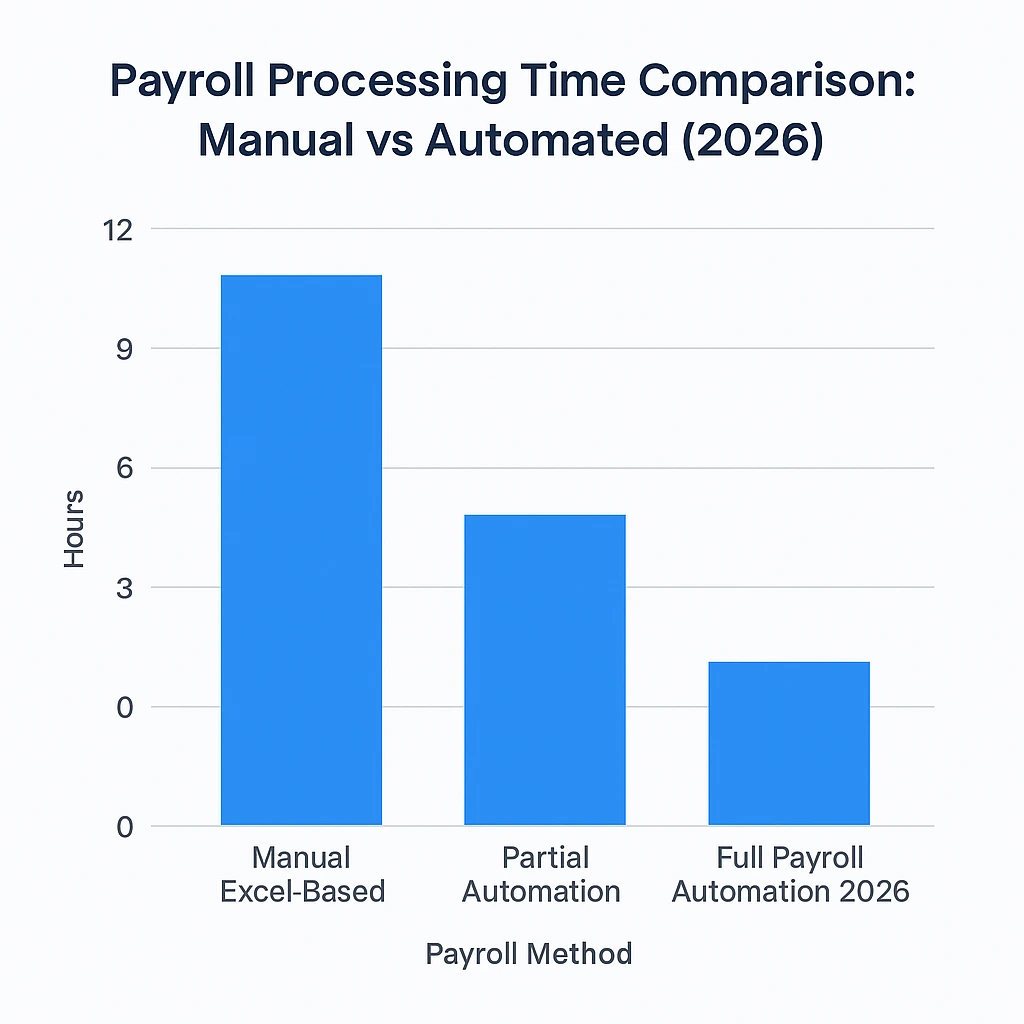
A few key numbers explain the story:
- Automation can reduce payroll processing time by 75 - 80%, according to recent studies on automated payroll systems. [VegamAI]
- Businesses using payroll software report 31% fewer payroll errors and 70% fewer compliance issues. [G2 Learn]
- In India, around 67% of companies were already using payroll automation software by 2024, with experts expecting that to cross 85% in the next few years. [blog.darwinbox.com]
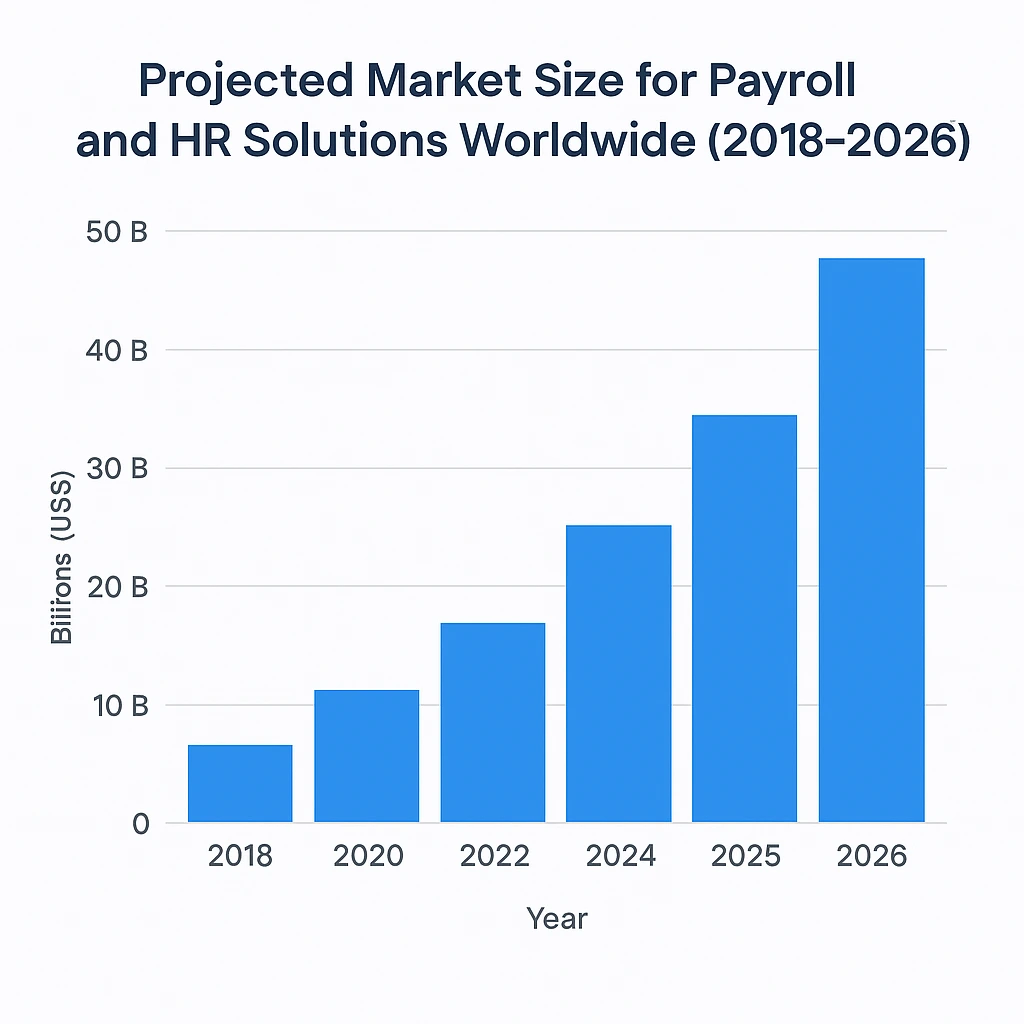
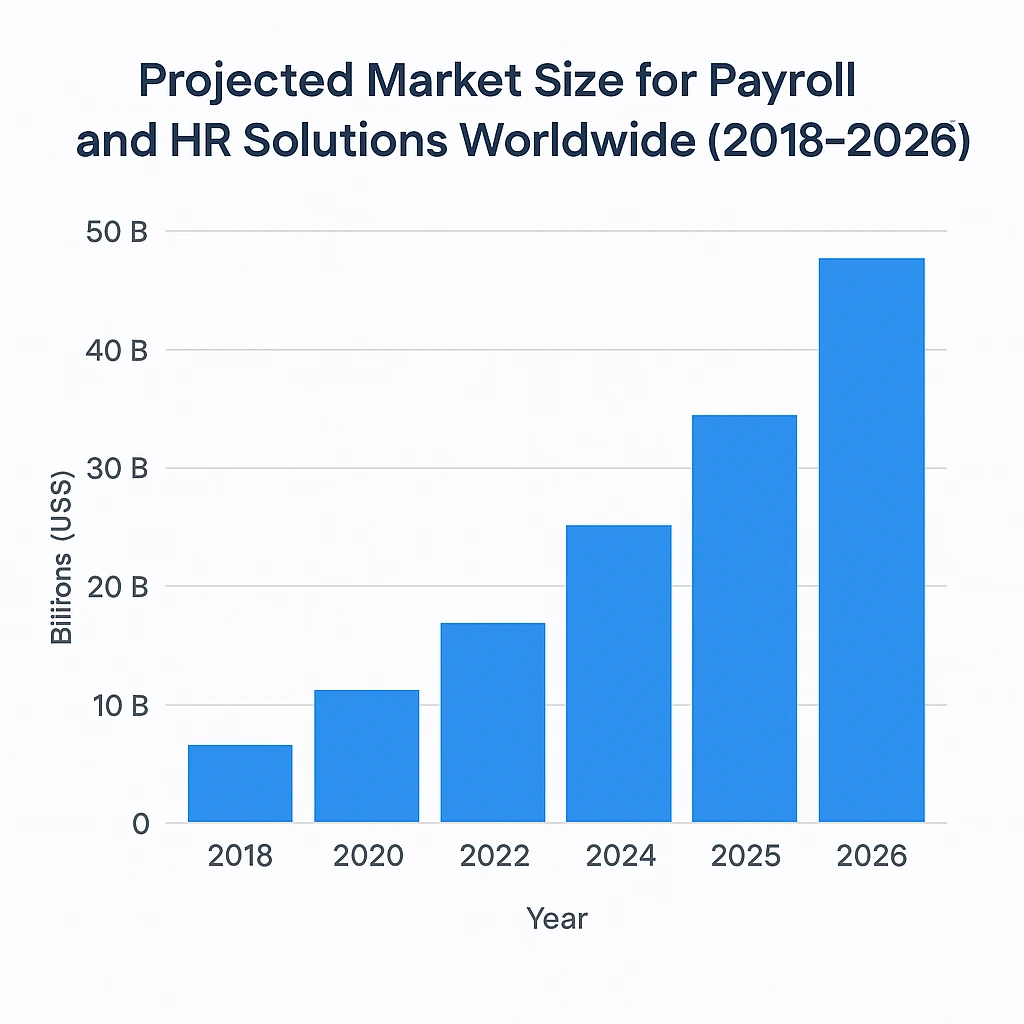
- A report also found that payroll and compliance account for 76% of overall HR software demand, highlighting how critical it is for companies to get payroll right. [ETHRWorld.com]
- Small business owners still using manual methods spend 8 - 16 hours per month on payroll processing alone. [Emgage]
2. What Is Payroll Automation (In Simple Terms)?
Payroll automation means using software (usually part of an HRMS) to handle all recurring payroll tasks with minimal manual involvement.
A modern automated payroll system can:
- Pull attendance & leave data automatically
- Calculate salaries, overtime, variable pay, and deductions
- Handle tax calculations, PF, ESI, TDS, bonuses, reimbursements
- Generate payslips automatically
- Process salary payments via bank files or APIs
- Create reports for audits, finance, and compliance
- Keep up with changing laws and tax rules
3. How Payroll Automation 2026 Works (End-to-End Flow)
Here’s how a typical HRMS-driven payroll automation flow looks in 2026:
- Data Collection (Auto)Attendance & leave pulled from HRMSShifts, overtime, LOP (Loss of Pay) syncedNew joinees, exits, increments updated
- Attendance & leave pulled from HRMS
- Shifts, overtime, LOP (Loss of Pay) synced
- New joinees, exits, increments updated
- Payroll Run (Auto Calculations)Software applies salary structures per employeeCalculates gross, net, taxes, deductions, bonusesFlags anomalies (e.g., sudden salary spike, missing data)
- Software applies salary structures per employee
- Calculates gross, net, taxes, deductions, bonuses
- Flags anomalies (e.g., sudden salary spike, missing data)
- Validation & ApprovalHR/Finance reviews summariesManagers can cross-check team-wise payoutsCorrections (if any) are applied once, not repeatedly
- HR/Finance reviews summaries
- Managers can cross-check team-wise payouts
- Corrections (if any) are applied once, not repeatedly
- Salary DisbursementBank files generated or direct integrations usedPayslips generated & sent to employee portal
- Bank files generated or direct integrations used
- Payslips generated & sent to employee portal
- Compliance & ReportingPF, ESI, TDS, PT statements auto-preparedReports for finance, audits, and management
- PF, ESI, TDS, PT statements auto-prepared
- Reports for finance, audits, and management
4. Time Savings: The Biggest Benefit of Payroll Automation 2026
One of the strongest use-cases for Payroll Automation 2026 is time saving.
Example Stat Backing This:
- Automated payroll can save up to 80% of the time spent on payroll processing compared to manual processes. [Wisemonk]
- Small business owners who used to spend 8 - 16 hours per month on payroll can now reduce this to just 1 - 3 hours for reviewing and approvals. [Emgage]
Suggested Graph 1: Time Spent on Payroll (Manual vs Automated)
Mode | Hours/Month (Example SME) |
Manual Excel-based | 12 hours |
Partial software usage | 6 hours |
Full payroll automation | 2 hours |
5. Reduced Payroll Errors & Better Accuracy
Payroll errors are not just embarrassing they’re dangerous:
- Employees lose trust
- Talented people leave over repeated salary mistakes
- Legal penalties for wrong tax deductions
- Compliance issues during audits
Automation directly attacks this problem.
Studies show companies using payroll software see:
- 31% fewer errors in payroll processing
- 70% fewer compliance issues due to automatic rule application and updated compliance rules. [G2 Learn]
What Automation Prevents:
- Incorrect tax calculations
- Missed overtime payouts
- Wrong arrear/bonus calculations
- Manual data entry mistakes
- Copy-paste errors in Excel
Instead of HR manually calculating everything, the system uses pre-set salary structures, formulas, and compliance rules.
6. Compliance Made Easy (Especially in India & Regulated Markets)
In India and many other countries, payroll isn’t just paying salaries — it includes:
- PF, ESI, LWF
- TDS, tax slabs, surcharge
- Gratuity, bonus, statutory leaves
- State-wise professional tax
- Changing regulations and deadlines
Modern payroll automation systems and HRMS:
- Automatically apply the latest tax rules
- Update slabs and thresholds with each revision
- Generate statutory reports and challans
- Maintain history for audits
This is why payroll & compliance drive more than 70% of HR software demand globally. [ETHRWorld.com]
7. How Payroll Automation Saves Money (Not Just Time)
You don’t just save time — you save money in multiple ways:
- Lower HR WorkloadHR can manage payroll for more employees without increasing headcountYour HR team spends more time on hiring, culture, retention — not Excel
- HR can manage payroll for more employees without increasing headcount
- Your HR team spends more time on hiring, culture, retention — not Excel
- Fewer Penalties & Legal IssuesCorrect tax & PF calculationsOn-time filings and paymentsLess risk of non-compliance fines
- Correct tax & PF calculations
- On-time filings and payments
- Less risk of non-compliance fines
- Reduced Overpayments & UnderpaymentsNo accidental double paymentsNo untracked overtimeLess correction back-and-forth
- No accidental double payments
- No untracked overtime
- Less correction back-and-forth
- Better Decision MakingPayroll analytics show labour cost by department, role, projectLeaders can adjust staffing and compensation strategically
- Payroll analytics show labour cost by department, role, project
- Leaders can adjust staffing and compensation strategically
Suggested Graph 2: Example Payroll Cost Savings Over Time
Year | Manual Payroll Cost (HR + Penalties + Errors) | Automated Payroll Cost (Software + HR) |
2024 | ₹10,00,000 | ₹7,50,000 |
2025 | ₹11,00,000 | ₹7,75,000 |
2026 | ₹12,00,000 | ₹8,00,000 |
8. Payroll Automation 2026 Is Cloud-First & Mobile-Ready
Old systems sat on one office computer.New Payroll Automation 2026 solutions are:
- Cloud-based → accessible anywhere, auto-updated, no heavy IT setup
- Mobile-friendly → employees view payslips, tax details, and reimbursements on their phones
- Connected with HRMS → no need to integrate 10 different tools manually
Cloud HRMS also helps with:
- Data backup
- Disaster recovery
- Role-based access permissions
- Easy scaling as employee count grows
9. How AI Is Entering Payroll Automation 2026
AI in payroll isn’t about replacing HR — it’s about making payroll smarter.
Some AI-driven capabilities include:
- Anomaly detection: Flagging suspicious transactions (unusually high payouts, misaligned tax, etc.) [Osource Global]
- Prediction: Forecasting future payroll expenses by project, branch, or team
- Chatbots: Answering employee questions about salary, tax, or deductions
- Recommendation: Suggesting the best structure for CTC, tax optimisation, and reimbursements
Right now, only a small percentage of companies are using AI for payroll, which means early adopters have a huge advantage in the next few years. [selectsoftwarereviews.com]
10. Why SMEs Love Payroll Automation 2026
Payroll automation isn’t only for big enterprises — it’s a lifesaver for SMEs.
For a small or mid-sized company:
- Founders & HR often wear multiple hats
- There’s no dedicated “payroll department”
- One mistake can damage trust quickly
With a modern HRMS payroll module, SMEs get:
- Enterprise-level accuracy
- Easy setup
- Low per-employee pricing
- Quick implementation
- Simple dashboards
Instead of spending a full day every month doing salary, they can review, approve, and move on.
11. Example Use-Case: Before vs After Payroll Automation
Before Automation:
- HR uses Excel + emails
- 2 HR people spend ~15 hours/month total
- Frequent LOP mismatches
- Manual bank upload every month
- 3–5 employees complain every cycle
- One compliance penalty in a year
After Payroll Automation 2026 (Using HRMS):
- Attendance + leave auto-synced
- 1 HR person spends ~3 - 4 hours/month (review + approvals)
- Near-zero payroll errors
- Payslips auto-generated in employee portal
- No penalties, correct tax & PF filings
- Employees fully trust their salary cycle
Result? Time saved, money saved, and stress saved.
12. Key Features to Look For in a Payroll Automation 2026 Solution
When businesses choose an HRMS or payroll software, they should look for:
- ✅ Integration with attendance & leave
- ✅ Support for local tax & labour laws (PF, ESI, TDS, PT, etc.)
- ✅ Configurable salary structures & earnings/deductions
- ✅ Employee self-service portal for payslips & tax proofs
- ✅ One-click reports for HR, finance & audit
- ✅ Role-based access & strong data security
- ✅ Cloud-based access with mobile app
- ✅ Support & regular compliance updates
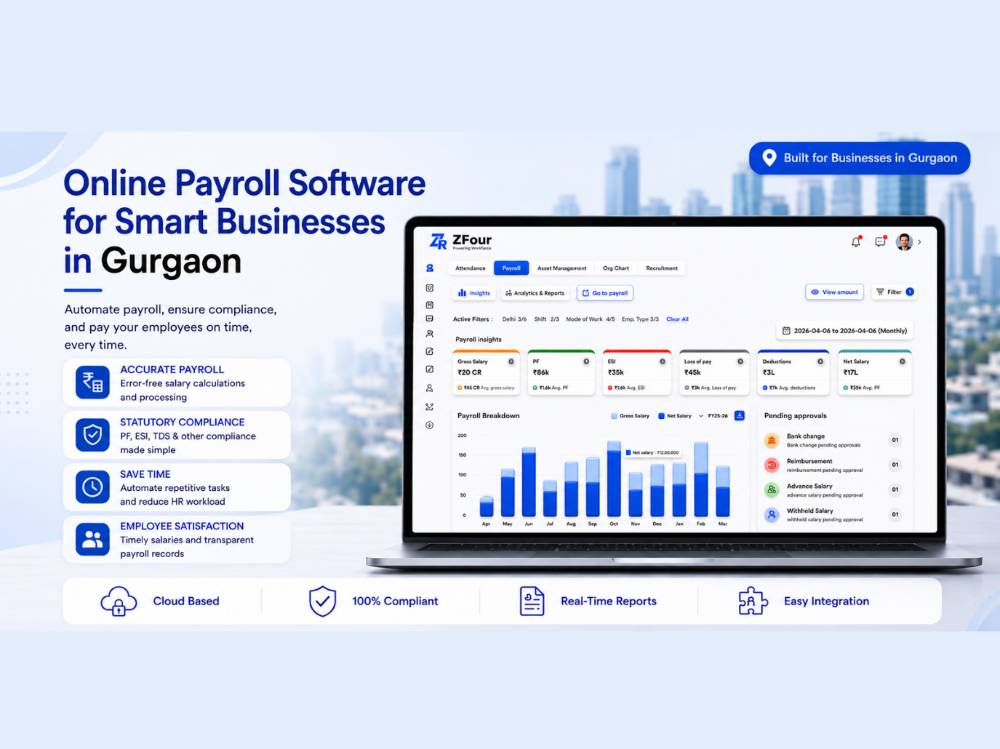
This is exactly where a solution like ZFour HRMS Payroll can stand out for Indian businesses.
13. The Future: Hyper-Automated, Insight-Driven Payroll
The direction is clear:
- Less manual entry
- More integrations
- More automation
- More AI and analytics
- Highly visual dashboards
- Global & multi-location payroll
- Stronger compliance focus
The Future of Payroll Automation 2026 and beyond is about turning payroll from a boring monthly headache into a strategic business function.
Conclusion
Payroll doesn’t have to be painful.
With Payroll Automation 2026, businesses can:
- Save up to 75–80% of time spent on processing
- Reduce payroll errors and compliance issues dramatically
- Improve employee trust with on-time, accurate payment
- Free HR to focus on people, not paperwork
- Gain deep insights into labour costs and workforce planning
If you want a system that combines automation, accuracy, compliance, and cost-effectiveness, it’s the right time to seriously consider a modern HRMS-based payroll solution.
1. What is Payroll Automation 2026?
Payroll Automation 2026 refers to the use of modern HRMS and payroll software to automate salary calculations, tax deductions, compliance, and payslip generation with minimal manual work.
2. How does payroll automation save time?
It automatically pulls data from attendance and HR systems, calculates pay, applies rules, and generates reports — reducing manual processing time by up to 75–80%.
3. Is payroll automation suitable for small businesses?
Yes. SMEs benefit the most because automation saves time, prevents errors, and reduces the need for a large HR/payroll team.
4. How does payroll automation improve compliance?
Automated systems stay updated with the latest tax and labour laws, apply correct formulas, and generate statutory reports, reducing the chance of penalties.
5. Is cloud payroll secure?
Modern cloud payroll systems use encryption, access control, backups, and regulatory compliance to keep salary and employee data safe.
6. What’s the difference between payroll software and HRMS payroll?
Standalone payroll software only handles salaries and compliance, whereas HRMS payroll is integrated with attendance, leave, performance, and employee data for a seamless end-to-end HR experience.
ZFour HRMS
Payroll Automation 2026
automated payroll system | HRMS payroll automation | payroll software 2026 | payroll accuracy and compliance | cloud payroll system | payroll automation for SMEs | modern payroll management | AI in payroll 2026 | HR payroll automation | payroll compliance automation | smart payroll processing | payroll error reduction | payroll cost savings | payroll workflow automation | AI-powered payroll | predictive payroll analytics | anomaly detection payroll | payroll automation tools | smart payroll systems | automated compliance updates