Functions of Human Resource Management (HRM): A Complete Guide
In today’s dynamic business landscape, Human Resource Management (HRM) plays a pivotal role in organizational growth.
From hiring the right talent to fostering a productive work culture, HRM functions go far beyond just recruiting and payroll.
This blog explores the core functions of HRM with insights into how they impact your business performance — and how tools like Zfour Solutions can make them more effective.
Key Functions of Human Resource Management (HRM)
Functions of Human Resource Management (HRM) include hiring the right talent, training and development, performance management, compensation planning, and maintaining positive employee relations.
These functions align workforce strategies with business goals, improve productivity, ensure legal compliance, and create a supportive work environment that drives organizational success.
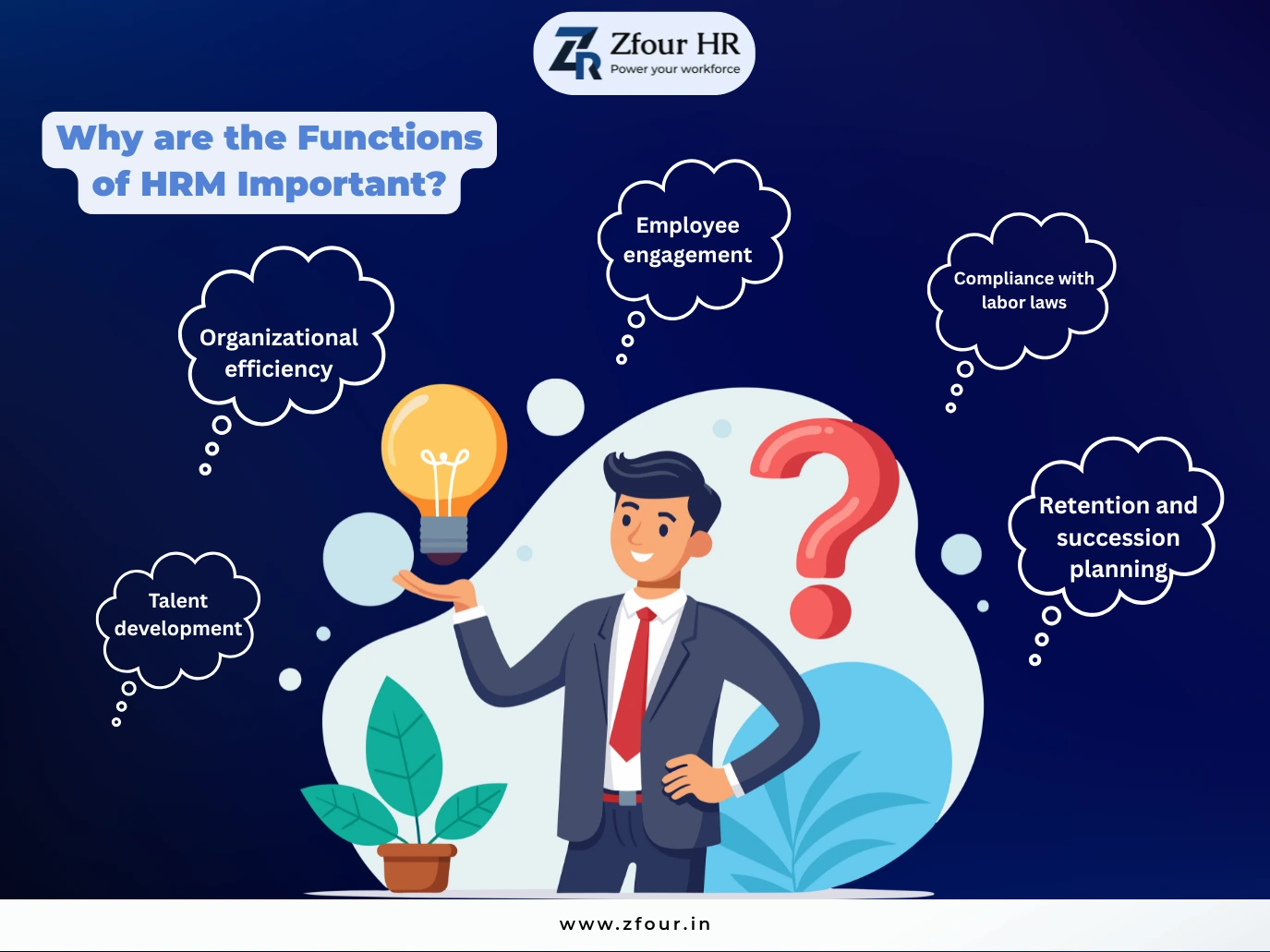
Why are the Functions of HRM Important?
Understanding the functions of HRM is crucial for building a high-performing, satisfied, and loyal workforce. Effective HRM ensures:
- Organizational efficiency
- Employee engagement
- Compliance with labor laws
- Talent development
- Retention and succession planning
Top 10 Key Functions of Human Resource Management
1. Recruitment and Selection
The most fundamental HR function. HRM ensures the right candidates are hired through structured job postings, resume screening, interviews, and assessments.
2. Employee Onboarding
Smooth onboarding sets the tone for an employee’s journey. HR teams handle document verification, system access, orientation, and cultural integration.
3. Training and Development
Continuous learning helps in upskilling employees and boosting productivity. HR designs training programs, soft skill workshops, and e-learning modules.
4. Performance Management
HR monitors and evaluates employee performance through KPIs, reviews, and feedback systems. This supports growth and helps in rewarding top talent.
5. Compensation and Benefits
This includes managing salaries, bonuses, insurance, retirement plans, and other benefits to ensure employee satisfaction and competitiveness.
6. Employee Engagement and Motivation
HR uses surveys, recognition programs, and open communication to keep employees engaged, satisfied, and loyal.
7. Legal Compliance
HR ensures that the company adheres to labor laws, tax regulations, health and safety policies, and anti-discrimination rules.
8. Industrial Relations
Maintaining healthy relationships between management and staff is critical. HR deals with disputes, negotiations, and unions where applicable.
9. Succession Planning
Identifying and preparing future leaders through mentoring, skill development, and role rotations.
10. HR Analytics and Strategy
Using data to make informed decisions about hiring, turnover, and performance. HR also aligns workforce planning with business goals.
To handle all these efficiently, you can explore Zfour's Business Automation Solutions.
How HRM Functions Support Business Growth
- Aligns people with business goals
- Builds a productive and happy workforce
- Reduces employee turnover
- Ensures legal and ethical compliance
Functions of HRM in Small vs. Large Businesses
Small Businesses
- Focus on essential functions like payroll, hiring, and compliance.
- Often managed by a small team or HR generalist.
Large Enterprises
- Specialized departments handle each HR function.
- Focus on analytics, automation, and large-scale workforce planning.
Future Trends in HRM Functions
AI in Recruitment
Using AI to screen resumes and match candidates with job roles.
Remote Workforce Management
With the rise of hybrid work, HR functions are adapting to virtual collaboration and engagement.
Diversity and Inclusion Initiatives
Modern HRM places a strong emphasis on creating inclusive work environments.
Final Thoughts
The functions of Human Resource Management are the backbone of a well-functioning organization. From talent acquisition to retention, HR professionals play a key role in shaping company culture and driving success.