February 2026 Labour Law Checklist for Indian Employers
February 2026 has become the most compliance-sensitive month for Indian employers. With the full enforcement of the Unified Annual Return (Form III) under the New Labour Codes, labour law compliance in India is now AI-driven, data-verified, and unforgiving of inconsistencies.
The February 2026 Labour Law Checklist is no longer just a reminder of deadlines. It is a framework that determines whether your organisation passes compliance automatically or receives a system-generated notice.
February 2026 Labour Law Checklist: What HR Must File on Time
What is the February 2026 Labour Law Checklist?
The February 2026 Labour Law Checklist is a mandatory set of statutory filings that Indian employers must complete in February, including Unified Annual Return (Form III), PF, ESIC, Professional Tax, TDS, and Labour Welfare Fund.
In 2026, these filings are digitally cross-verified using payroll and contribution data, and mismatches can trigger automated compliance notices without human review.
What Changed in Labour Law Compliance in 2026?
From 2026 onward, labour law compliance has shifted from document submission to data consistency.
The government’s compliance systems now verify:
- Monthly EPFO & ESIC contributions
- Annual wage declarations
- Overtime limits
- Minimum wage adherence
All filings are validated through the Shram Suvidha Portal, which uses automated discrepancy detection.
This means:
- Late filing is risky
- Incorrect data is even riskier
Unified Annual Return (Form III): Meaning and Applicability
What is Form III?
Form III is the Unified Annual Return introduced under the New Labour Codes. It consolidates multiple legacy labour law filings into a single annual submission, covering:
- Payment of Wages Act
- Minimum Wages Act
- Contract Labour (R&A) Act
- Maternity Benefit Act
- Payment of Bonus Act
Why Form III is high-risk in February 2026
Because Form III is unified, any mismatch between :
- Monthly payroll records
- EPF/ESIC ECR filings
- Annual gross wage totals
can automatically generate a Notice for Discrepancy.
February 2026 Statutory Due Dates Calendar (India)
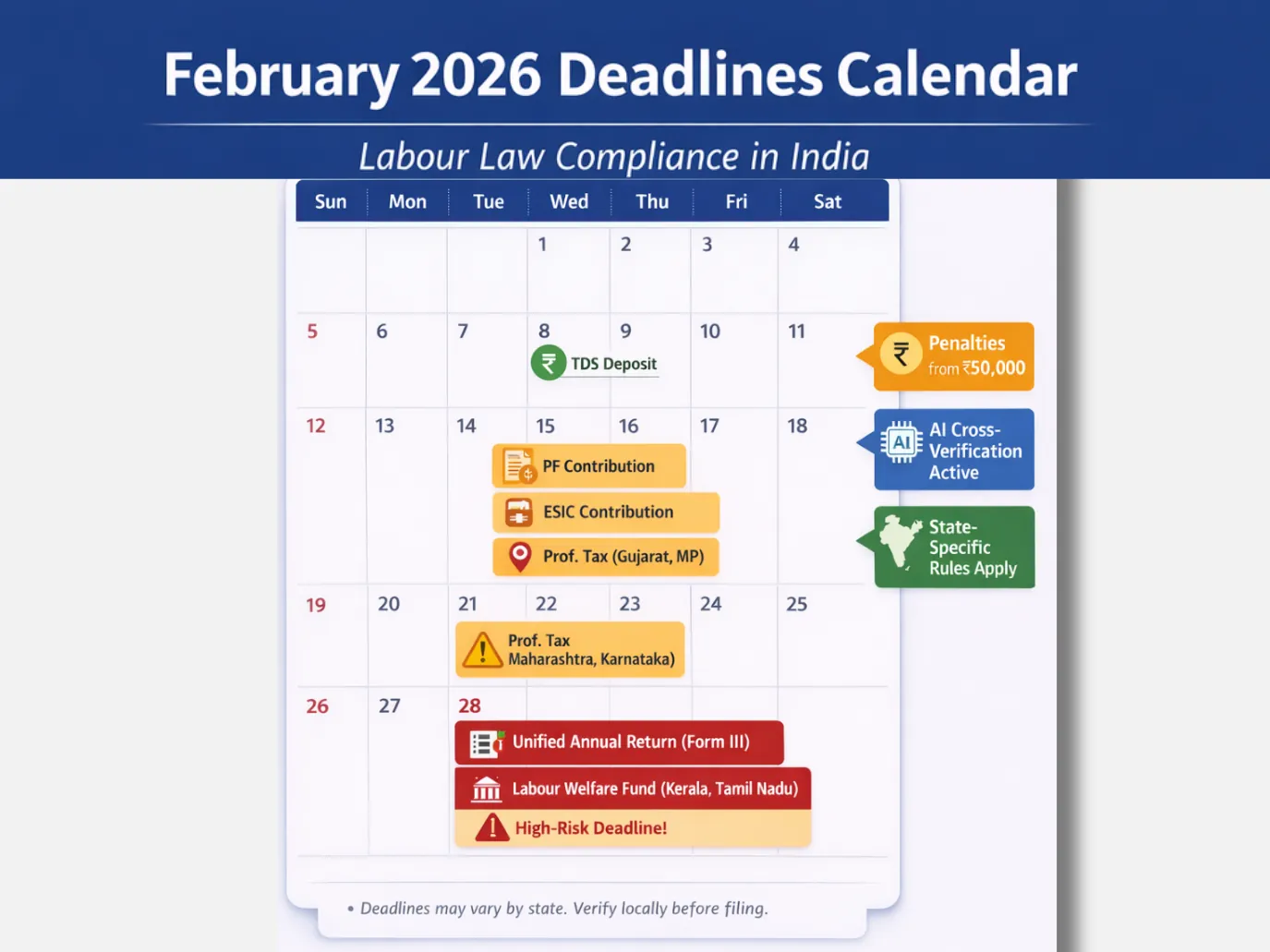
Compliance Requirement | Deadline | Applicable Law |
TDS Deposit | February 7 | Income Tax Act |
PF & ESIC Contribution | February 15 | EPF & MP Act / ESI Act |
Professional Tax (Gujarat, MP) | February 15 | State PT Laws |
Professional Tax (Maharashtra, Karnataka) | February 20 | State PT Laws |
Unified Annual Return (Form III) | February 28 | New Labour Codes |
Labour Welfare Fund (Kerala, Tamil Nadu) | February 28 | State LWF Acts |
February 28 is the highest-risk date, as multiple systems validate compliance simultaneously.
State-Wise Compliance Risks Employers Must Watch
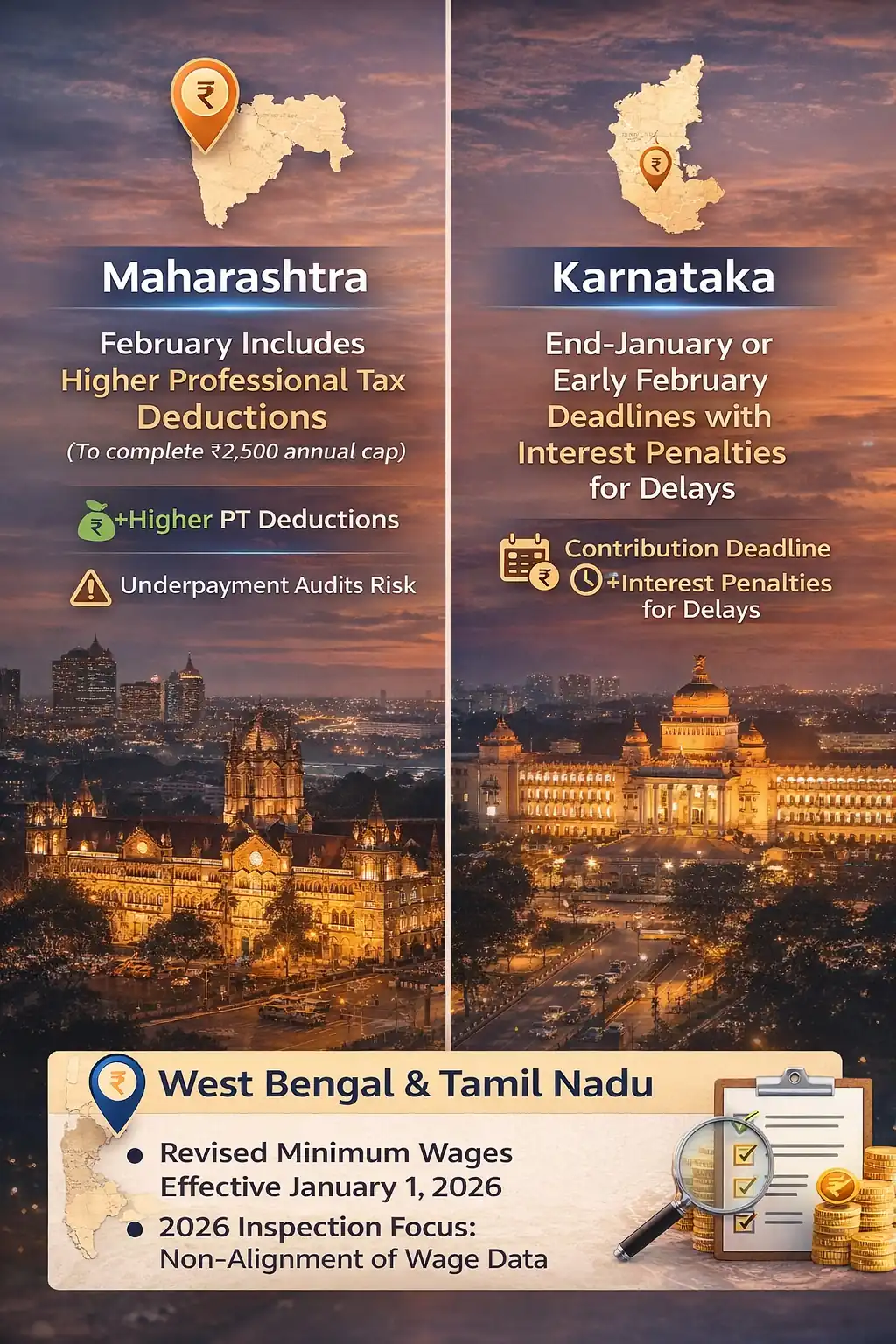
Maharashtra and Karnataka
- Maharashtra Professional Tax: February includes a higher PT deduction to complete the annual ₹2,500 cap.
- Karnataka Labour Welfare Fund: Employer contribution deadlines fall in late January or early February, with interest penalties for delays.
West Bengal and Tamil Nadu
- Revised minimum wages effective January 1, 2026
- Filing annual returns with outdated wage data can trigger automated underpayment audits
State-wise non-alignment is one of the most common reasons for inspections in 2026.
Digital Audits and the Inspector-cum-Facilitator Model
In 2026, labour inspections are digital-first.
During audits, employers must instantly produce:
- Form A – Muster Roll (including GPS-based attendance, where applicable)
- Form B – Register of Wages (with compliant basic pay structure)
- Form D – Attendance Card (digitally accessible to employees)
Failure to generate these registers on demand may result in immediate non-compliance tagging.
How HRMS Automation Reduces Compliance Risk in 2026?
Manual filing increases the probability of:
- Data entry errors
- Inconsistent records
- Missed state-specific rules
Automated compliance systems reduce these risks by synchronizing payroll, attendance, and statutory data.
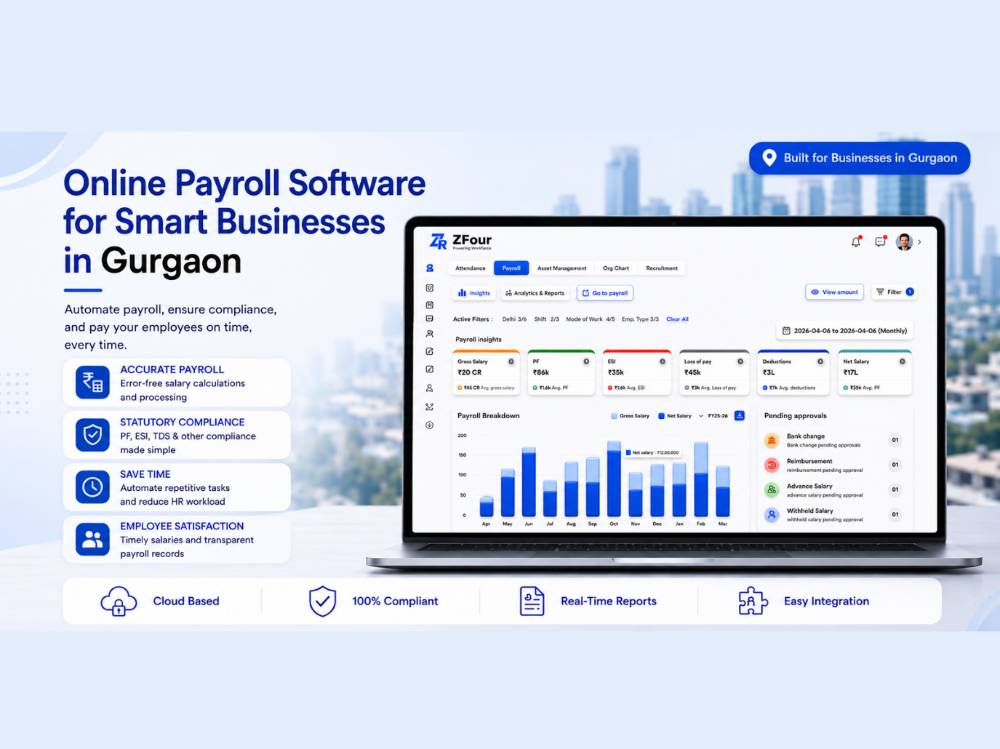
How Zfour Supports February Compliance
- Auto-populates Form III using payroll and attendance data
- Runs pre-submission checks for wage and contribution mismatches
- Flags overtime and minimum wage risks before filing
- Enables faster, more accurate statutory submissions
Automation shifts compliance from last-minute filing to continuous readiness.
Penalties for Missing February 2026 Labour Law Deadlines
Non-compliance can result in:
- Monetary penalties starting from ₹50,000 per establishment
- Interest on delayed contributions
- Increased inspection frequency
- Compliance risk during funding, audits, and tenders
In an AI-verified environment, errors are detected instantly—not months later.
February 2026 Is a Compliance Stress Test
February 2026 represents a turning point in Indian labour law compliance. Employers who rely on manual processes face higher audit and penalty risks, while organizations using structured, data-driven systems gain operational and legal confidence.
The February 2026 Labour Law Checklist is no longer optional guidance.
It is a business-critical requirement.