Basic Salary in Noida 2026: Complete Guide
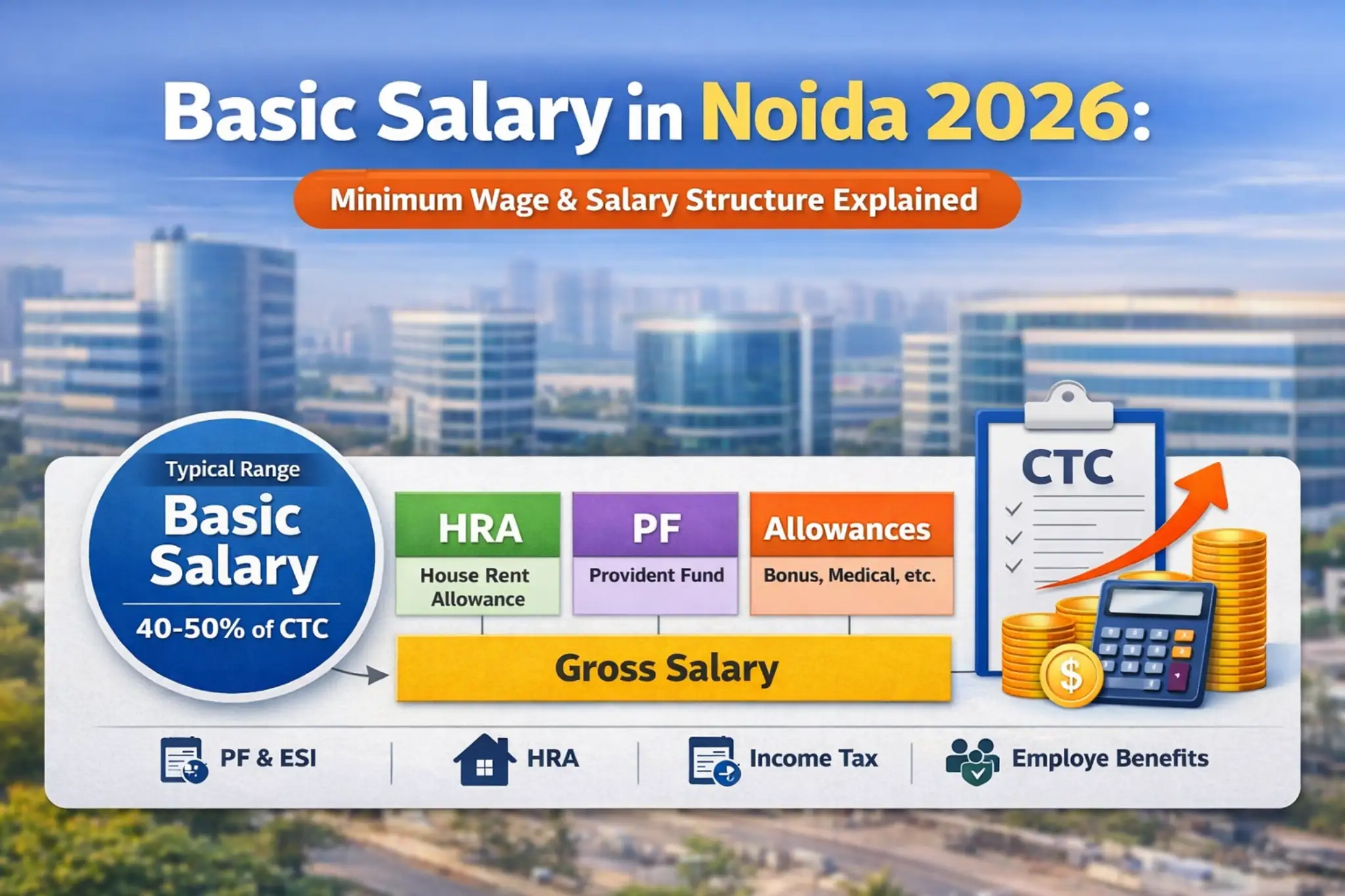
What is the Basic Salary in Noida in 2026?
The basic salary in Noida in 2026 typically ranges between ₹10,000 to ₹15,500 per month for entry-level and wage-based roles, depending on the skill level.
For corporate and private sector jobs, the basic salary is generally structured as 40% to 50% of the total CTC.
If you are running a business or managing HR operations in Noida, understanding how basic salary works is essential.
It directly impacts payroll and compliance.
In simple terms, basic salary is the foundation of the entire salary structure, and every other component is built around it.
Basic Salary in Noida 2026 (Minimum Wage Overview)
Minimum wages in Noida are regulated under Uttar Pradesh labour laws and are categorized based on skill levels.
Minimum Wage Table (Noida 2026)
Category | Monthly Salary (₹) | Skill Level |
Unskilled | ₹10,000 – ₹12,000 | Entry-level |
Semi-Skilled | ₹11,500 – ₹13,500 | Basic trained |
Skilled | ₹13,000 – ₹15,500 | Experienced |
Highly Skilled | ₹15,500+ | Advanced |
These wages are revised periodically, so employers must stay updated to ensure compliance and avoid penalties.
What is Basic Salary in Salary Structure?
Basic salary is the fixed component of an employee’s salary before allowances and bonuses are added. It does not include incentives, overtime, or reimbursements.
It directly impacts compliance, payroll accuracy, and business efficiency.
- Provident Fund (PF) contribution
- House Rent Allowance (HRA)
- Gratuity calculation
- Bonus eligibility
- Income tax impact
Most companies in Noida follow a structure where the basic salary is kept between 40% to 50% of the total salary package to maintain compliance and optimize employee benefits.
Basic Salary Structure Example (Noida Company)
Understanding a real example makes it easier to apply.
Salary Breakdown Table
Component | Percentage | Example (₹30,000 CTC) |
Basic Salary | 40% | ₹12,000 |
HRA | 20% | ₹6,000 |
Special Allowance | 30% | ₹9,000 |
PF Deduction | 12% of basic | ₹1,440 |
This structure ensures a balance between compliance, employee take-home salary, and employer cost.
In-Hand Salary Calculation in Noida (2026 Guide)
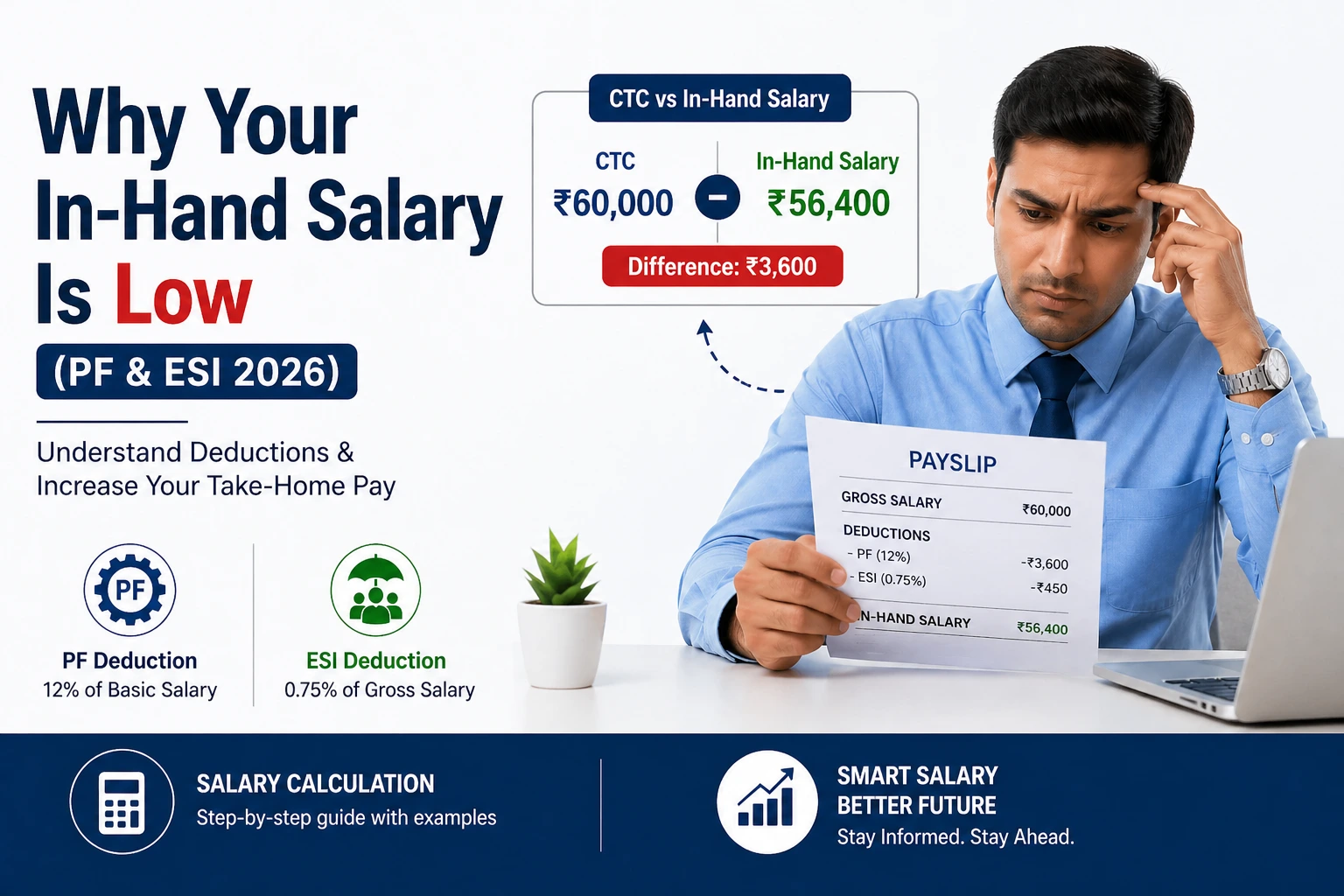
Understanding in-hand salary is important for both employees and employers. While CTC shows the total cost to the company, the in-hand salary is the actual amount an employee receives after deductions.
📌 What is In-Hand Salary?
In-hand salary (also called take-home salary) is calculated after deducting:
- Provident Fund (PF)
- Employee State Insurance (ESI) (if applicable)
- Income Tax (TDS)
- Other deductions (if any)
🧮 In-Hand Salary Formula
In-hand salary = Gross salary – ( (PF + ESI + TDS + Other Deduction)
Example: In-Hand Salary Calculation (₹30,000 CTC)
Component | Amount (₹) |
Basic Salary | ₹12,000 |
HRA | ₹6,000 |
Allowances | ₹9,000 |
Gross Salary | ₹27,000 |
Deductions:
- PF (12% of basic) = ₹1,440
- ESI (if applicable) ≈ ₹200
- TDS (approx) = ₹500
👉 Final In-Hand Salary ≈ ₹24,800 – ₹25,000
Key Insights
- Higher basic salary → Higher PF deduction → Lower in-hand salary
- Lower basic salary → Higher take-home → Lower long-term benefits
- Proper structuring helps balance tax, savings, and take-home pay
Why In-Hand Salary Matters
For employees:
- Helps in financial planning
- Gives clarity on actual earnings
For employers:
- Ensures transparent salary structure
- Improves employee satisfaction

Why Basic Salary Matters for Businesses in Noida
Many businesses underestimate how important salary structuring is. However, basic salary directly impacts financial and legal aspects of a company.
Key reasons:
- It determines statutory compliance
- It affects employee benefits and deductions
- It impacts employer contributions like PF
- It helps in cost planning and budgeting
If the basic salary is set too low or incorrectly structured, companies may face compliance issues and employee dissatisfaction.
Basic Salary vs Gross Salary vs CTC
Many employees and employers confuse these three terms.
Comparison Table
Term | Meaning |
Basic Salary | Fixed base pay |
Gross Salary | Basic + allowances |
CTC | Total cost to company |
Basic salary is the most important component because all statutory and tax calculations are based on it.
Payroll Compliance Rules in Noida (2026)
Businesses in Noida must follow several labour and tax regulations.
These include:
- Minimum Wage Act
- Provident Fund rules
- Employee State Insurance (ESI)
- Income Tax (TDS) regulations
For official updates, businesses can refer to:
- Income Tax Department India
- EPFO official portal
These sources provide the latest compliance guidelines and updates.
Minimum Wage Compliance Checklist for Employers in Noida (2026)
Understanding minimum wage is not enough—businesses must also ensure they are fully compliant with labour laws. Even small mistakes in wage handling can lead to penalties or legal complications.
✅ Employer Checklist
To stay compliant in 2026, companies in Noida should ensure:
- Employees are paid as per their skill category (unskilled, semi-skilled, skilled, highly skilled)
- Basic salary is never below the government-defined minimum wage
- Salary payments are made on time without delays
- Proper records of wages, attendance, and payslips are maintained
- PF, ESI, and other statutory deductions are correctly calculated and deposited
⚠️ Risks of Non-Compliance
Ignoring minimum wage rules can result in serious consequences:
- Legal penalties and fines
- Government inspections and audits
- Loss of employee trust
- Damage to company reputation
💡 Pro Insight
Many businesses in Noida face compliance issues not due to lack of knowledge, but due to manual payroll errors. This is why companies are increasingly adopting payroll software to automate compliance and reduce risk.
Common Mistakes in Salary Structuring
Many companies make avoidable mistakes while setting up salary structures.
Common errors:
- Keeping basic salary below minimum wage
- Ignoring periodic wage updates
- Incorrect PF and ESI calculations
- Managing payroll manually without automation
These mistakes can lead to penalties, employee disputes, and operational inefficiencies.
How Payroll Software Helps Manage Basic Salary
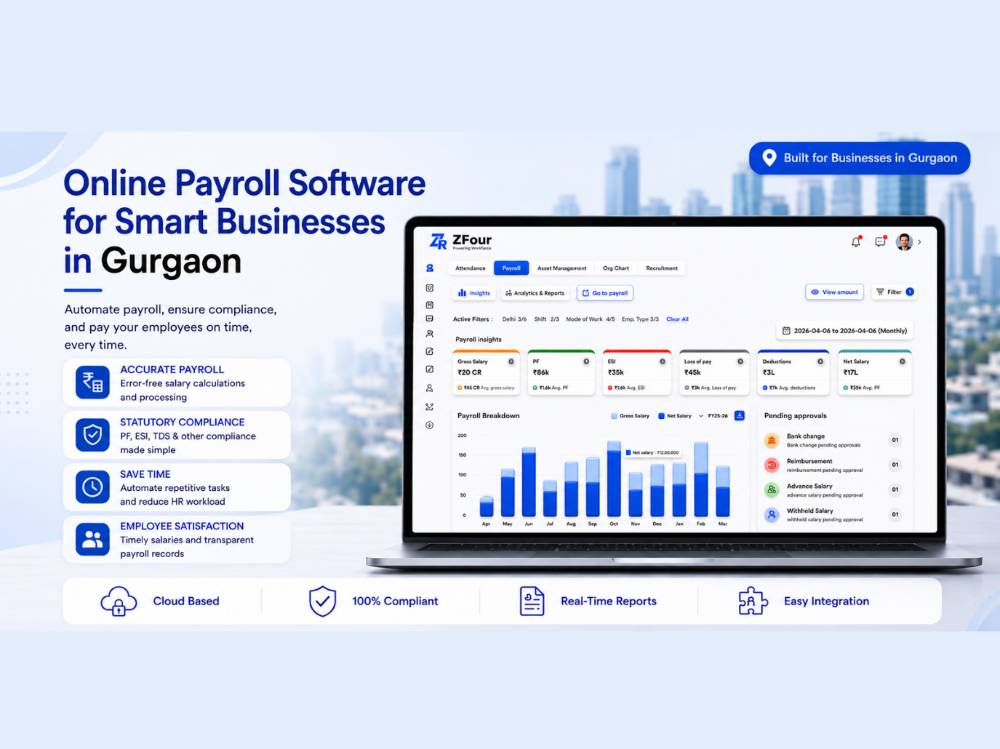
Managing salary manually is not only time-consuming but also risky. Payroll software simplifies and automates the entire process.
It helps businesses:
- Calculate basic salary automatically
- Ensure compliance with labour laws
- Manage PF, ESI, and TDS
- Generate payslips and reports instantly
👉 Explore a complete payroll solution here.
Why Businesses in Noida Prefer Payroll Automation
Companies are increasingly adopting payroll automation due to multiple benefits.
Key advantages:
- Saves significant time
- Reduces manual errors
- Improves accuracy in calculations
- Ensures compliance with regulations
Automation allows HR teams to focus on strategic tasks rather than repetitive calculations.
Best Practices for Salary Structuring
To create an effective salary structure, businesses should follow these best practices:
- Keep basic salary within 40–50% of CTC
- Ensure compliance with minimum wage laws
- Balance tax benefits for employees
- Use payroll software for accuracy
- Review salary structures regularly
👉 Learn more about HR systems here.
Real Case Insight (Noida SME)
A growing SME in Noida faced frequent payroll errors due to manual calculations. After switching to payroll software, they achieved:
- 70% reduction in errors
- Faster salary processing
- Improved compliance
- Better employee satisfaction
This shows how automation can transform HR operations.
Future Trends in Salary Structure (2026)
Payroll and salary structures are evolving with technology and compliance requirements.
Emerging trends:
- Increased use of automation tools
- Cloud-based payroll systems
- Integration with attendance and HR systems
- Focus on employee experience
Businesses that adopt these trends early gain a competitive advantage.
What is the minimum basic salary in Noida in 2026?
It starts from ₹10,000–₹12,000 for unskilled workers and increases based on skill level.
What percentage of CTC is basic salary?
Typically 40%–50% of the total CTC.
Is the basic salary fixed?
Yes, it is fixed, but varies depending on company policy and role.
Why is basic salary important?
It affects PF, HRA, gratuity, and tax calculations.
Can payroll software manage salary structure?
Yes, it automates salary calculations and ensures compliance.
Is basic salary the same in all companies?
No, it varies based on company policy, industry, and job role.