Attendance Software for Schools in Noida: Complete Guide
Attendance Software for Schools in Noida: Complete Guide
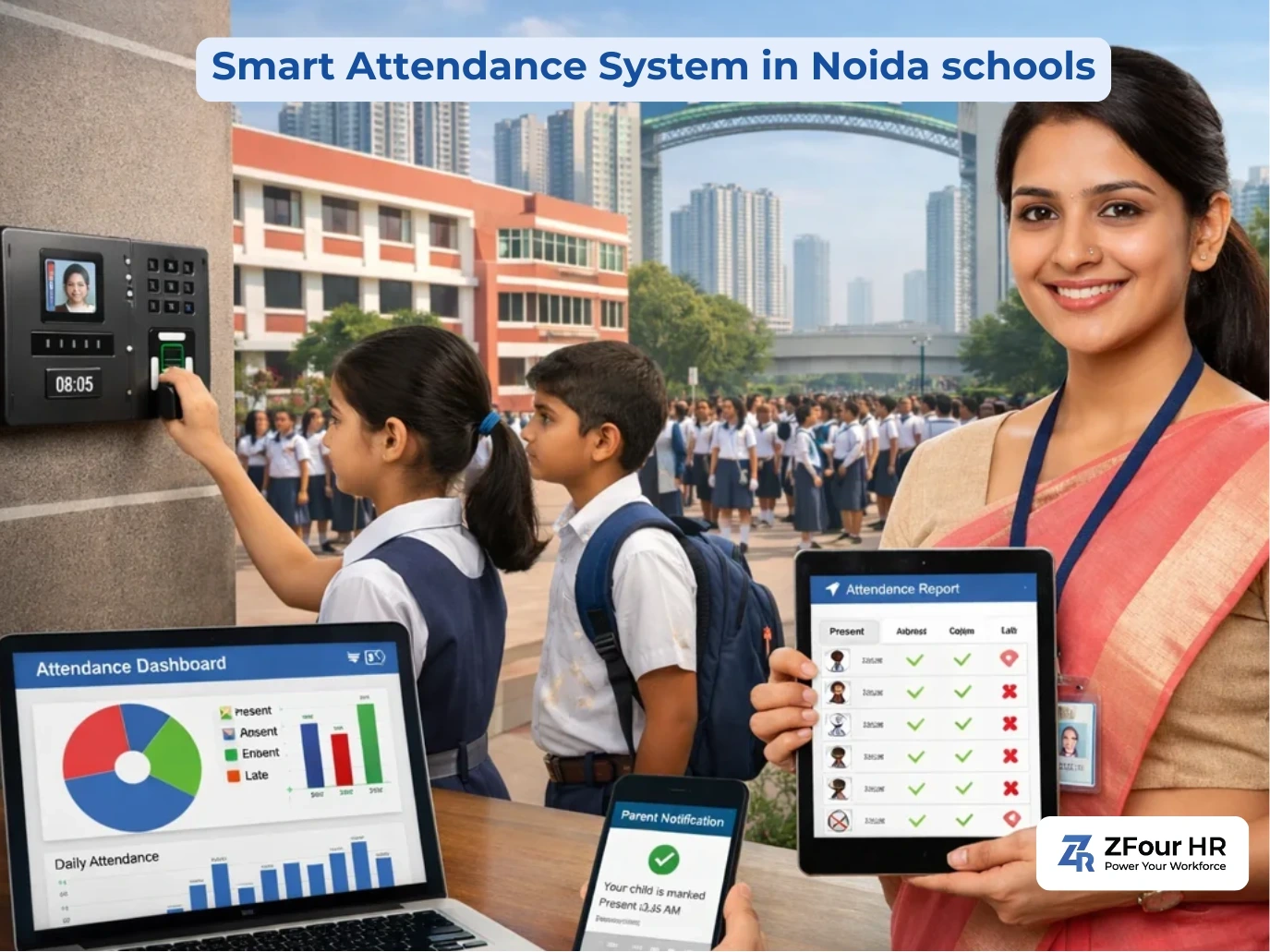
Attendance software for schools in Noida is a digital system that helps educational institutions track student attendance automatically using biometric devices, RFID cards, or mobile applications.
It improves accuracy, reduces manual work, and provides real-time attendance data for teachers, administrators, and parents.
Educational institutions in Noida are rapidly adopting digital attendance systems to simplify administrative tasks and improve operational efficiency.
Attendance tracking plays a crucial role in maintaining discipline, monitoring academic performance, and ensuring transparent communication.
In earlier times, schools relied on manual attendance registers. While this method worked for smaller institutions, it becomes inefficient as schools grow in size
Managing large volumes of student data manually increases the risk of errors, delays, and inconsistencies.
As expectations from parents and education authorities increase, schools need accurate, secure, and real-time attendance systems.
Traditional methods fail to meet these demands due to a lack of automation and structured reporting.
Modern attendance software for schools in Noida provides a reliable solution by automating attendance tracking, generating instant reports, and offering data-driven insights.
These systems not only save time but also improve accountability and decision-making.
This guide explains how attendance systems work, their benefits, key features, and how schools can implement them effectively.
Digital Attendance Software for Schools in Noida
Definition and Core Purpose
A digital attendance system is a software-based platform designed to record, store, and manage attendance automatically.
Instead of relying on manual entries, these systems use technology such as biometric devices, RFID cards, or mobile applications to capture attendance data.
Once recorded, the data is stored in a centralized system where it can be accessed by authorized users. This ensures that attendance records remain accurate, consistent, and easily available whenever needed.
These systems are usually cloud-based, which means they can be accessed from multiple devices, including computers and smartphones.
This flexibility allows teachers and administrators to manage attendance efficiently from anywhere.
Why Traditional Methods Are Becoming Obsolete
Manual attendance systems rely heavily on human effort and consistency. Over time, several limitations become apparent, especially in larger institutions.
As the number of students increases, these systems become inefficient and difficult to manage.
Errors, delays, and data inconsistencies are common issues.
Because of these limitations, schools are increasingly shifting toward automated attendance systems that provide better accuracy, efficiency, and transparency.
Evolution of Attendance Tracking in Schools
1. Manual Attendance System (Traditional Method)
In the early stages of formal education systems, attendance tracking was completely manual. Teachers used physical registers to mark student attendance at the beginning of each class or day.
These registers were later used to calculate attendance percentages manually at the end of each week or month.
While this method was simple and easy to understand, it had several limitations. Registers could be misplaced or damaged, handwriting errors could lead to incorrect records, and verifying historical data required significant effort.
2. Digital Transition with Spreadsheets
With the introduction of technology, many schools shifted to spreadsheet-based systems. Attendance data was recorded digitally, improving organization and speeding up calculations.
Attendance data was recorded digitally, which improved organization and made calculations faster.
However, this method still required manual data entry. Teachers had to input attendance details after every class, which increased workload and left room for errors.
Additionally, these systems were not always centralized, making it difficult for multiple users to access or update data simultaneously.
3. Modern Attendance Software Systems
The introduction of biometric and RFID-based systems marked a major shift toward automation.
These technologies reduced manual effort and improved accuracy in attendance tracking.
Modern attendance systems go beyond simple tracking. They integrate multiple features such as real-time reporting, analytics, and communication tools.
This transformation has made attendance management more efficient, accurate, and scalable for institutions of all sizes.
Importance of Attendance Software for Schools in Noida
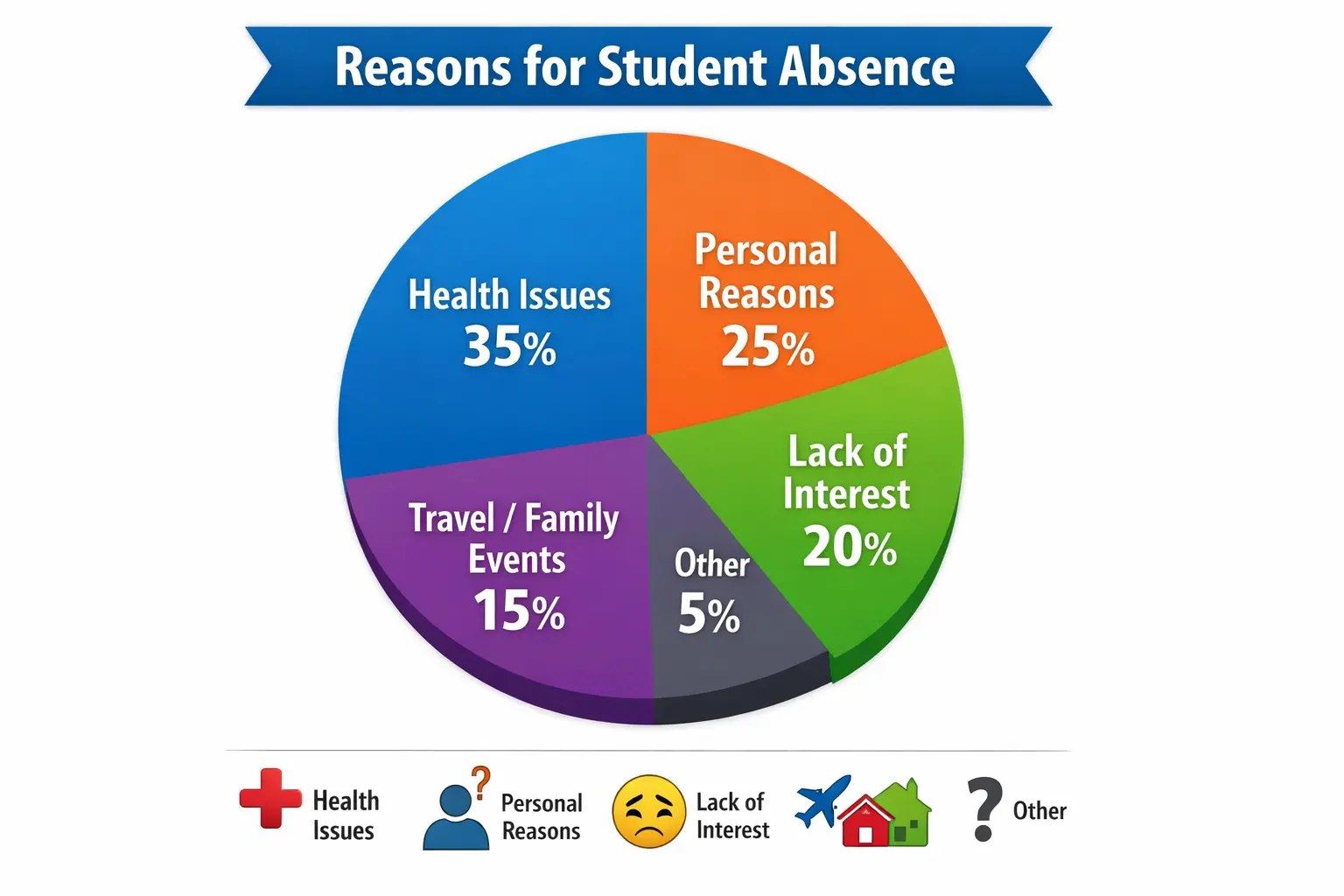
Attendance data is not just a record of presence; it also reflects student engagement and behavior It serves as a key indicator of student behavior, engagement, and overall academic consistency. Schools can use attendance data to identify patterns and make informed decisions.
For example, consistent absenteeism may indicate underlying issues such as lack of interest, health concerns, or personal challenges. Early identification of such patterns allows schools to intervene and provide support where needed.
Attendance data also helps in maintaining discipline within the institution. When students know that their attendance is being monitored accurately, they are more likely to follow schedules and maintain regularity.
Attendance Insights Through Visual Data
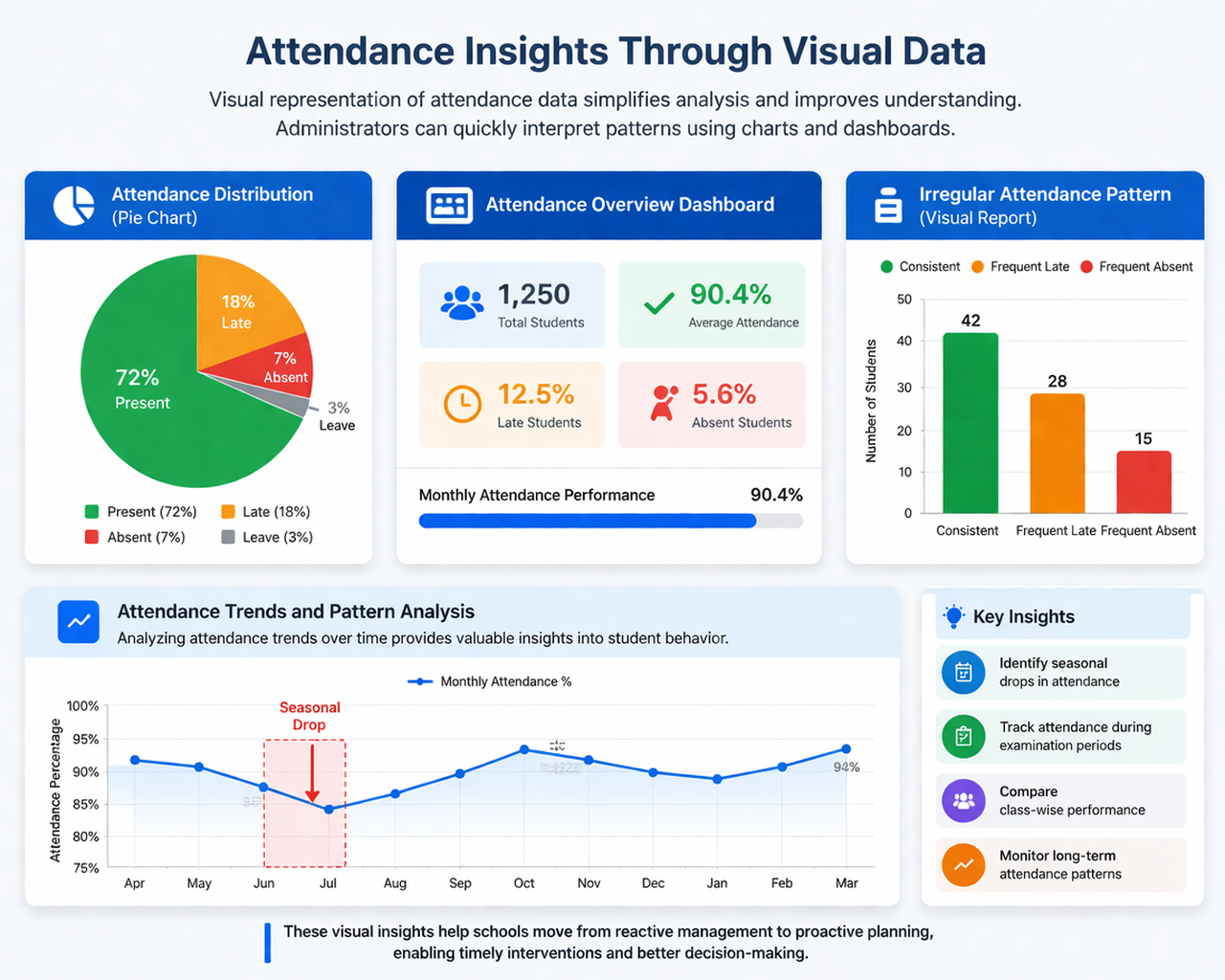
Visual representation of attendance data simplifies analysis and improves understanding. Instead of going through rows of numbers, administrators can quickly interpret patterns using charts and dashboards.
- Pie charts show the distribution of attendance categories
- Dashboards provide a summary of overall attendance
- Visual reports highlight irregular patterns
This approach makes it easier for decision-makers to identify issues and take timely action.
Attendance Trends and Pattern Analysis
Analyzing attendance trends over time provides valuable insights into student behavior. Schools can track how attendance changes across different months, seasons, or academic periods.
Identify seasonal drops in attendance
- Track attendance during examination periods
- Compare class-wise performance
- Monitor long-term attendance patterns
These insights help schools move from reactive management to proactive planning, ensuring better outcomes for students.
Key Features of Attendance Software for Schools in Noida
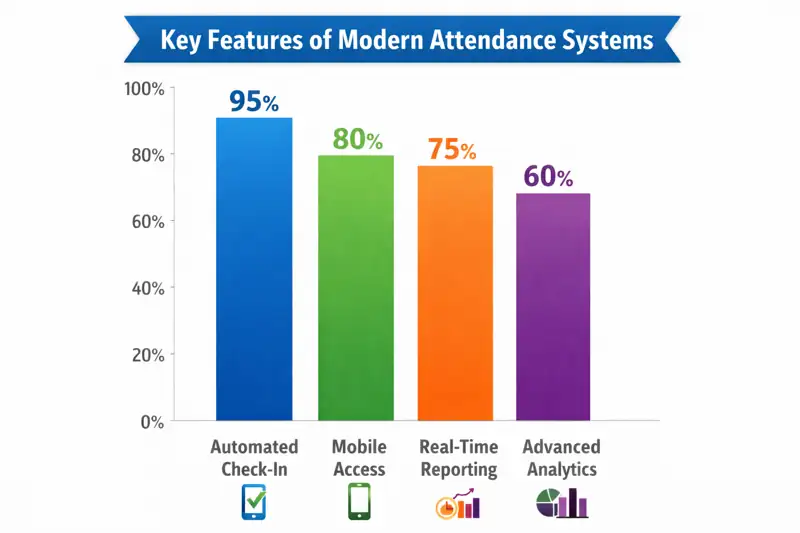
Modern attendance systems are designed to simplify operations while providing accurate and structured data. Unlike basic tools, these systems combine multiple functionalities that support both administrative and academic needs.
Core Functional Capabilities
- Automated attendance capture through biometric, RFID, or app-based methods
- Centralized database for storing and managing records
- Real-time synchronization of attendance data
- Multi-user access for teachers, administrators, and management
These capabilities form the backbone of any reliable attendance system and ensure consistency across the institution.
Advanced Functional Capabilities
- Mobile-based attendance marking for flexibility
- Instant notifications to parents regarding presence or absence
- Role-based dashboards for different users
- Integration with academic and administrative systems
These advanced features enhance usability and ensure that the system adapts to the needs of different stakeholders.
Comparison of Attendance Methods
Different methods of attendance tracking vary in terms of efficiency, accuracy, and scalability. The following table provides a clear comparison.
Method | Accuracy | Time Required | Automation | Reporting |
Manual Register | Low | High | No | Limited |
Spreadsheet System | Medium | Medium | Partial | Basic |
Biometric System | High | Low | Yes | Advanced |
Cloud-Based Software | Very High | Very Low | Yes | Real-Time |
This comparison highlights the clear advantages of modern systems over traditional methods.
How Attendance Systems Work
Step-by-Step Operational Flow
- Students mark attendance using a selected method such as biometric scan, RFID card, or mobile application
- The system records the data instantly and stores it in a centralized database
- Teachers and administrators access dashboards to review attendance in real time
- Reports are generated automatically without manual intervention
- Parents receive updates through notifications or mobile applications
This structured workflow ensures accuracy and eliminates delays in communication.
Benefits for Educational Institutions
Administrative Efficiency
Attendance systems significantly reduce the workload on teachers and administrative staff. Tasks that previously required manual effort are now automated, allowing staff to focus on more important responsibilities.
- Reduces time spent on record keeping
- Simplifies report generation
- Improves overall workflow
Accuracy and Data Reliability
One of the biggest advantages of digital systems is accuracy. Automated processes reduce the chances of errors and ensure that records remain consistent.
- Eliminates duplicate entries
- Reduces manual mistakes
- Maintains consistent data records
Improved Communication
Modern systems enhance communication between schools and parents. Real-time updates ensure that parents are always informed about their child’s attendance.
- Instant notifications for absence
- Improved transparency
- Better parent engagement
Student Discipline and Monitoring
Attendance tracking plays a direct role in maintaining discipline within the school.
- Encourages punctuality
- Identifies absentee patterns early
- Enables timely corrective action
Sample Attendance Record
Student Name | Total Days | Present | Absent | Percentage |
Aarav Sharma | 30 | 27 | 3 | 90% |
Riya Verma | 30 | 28 | 2 | 93% |
Kabir Singh | 30 | 25 | 5 | 83% |
This type of structured data allows schools to evaluate performance easily and take necessary actions.
Cost and Long-Term Value
Initial Investment
The cost of implementing an attendance system depends on several factors, including features, infrastructure, and scale.
- Basic systems are cost-effective
- Advanced systems include additional functionalities
Long-Term Benefits
Although the initial cost may seem high, the long-term benefits justify the investment.
- Reduced administrative workload
- Improved efficiency
- Better data accuracy
- Time savings across departments
Data Security and Privacy in Attendance Systems
As schools adopt digital systems, protecting student data becomes a top priority. Attendance records contain sensitive information, and any breach can affect trust and compliance.
Modern systems are designed with multiple layers of security to ensure data safety.
- Encryption protects stored and transmitted data
- Role-based access ensures only authorized users can view or edit information
- Secure cloud servers prevent data loss or unauthorized access
- Regular backups safeguard records against technical failures
In addition to technology, schools must also implement internal policies to ensure responsible use of data. Proper training and access control play an important role in maintaining data integrity.
Integration with School Management Systems
Attendance systems do not operate in isolation. They are often integrated with other tools to create a unified management environment.
- Payroll systems for staff attendance and salary processing
- Communication platforms for sending notifications to parents
- Academic systems for linking attendance with performance tracking
- Administrative tools for overall school management
Integration reduces duplication of work and ensures that information flows smoothly across departments. This creates a more efficient and connected system.
Implementation Challenges
Common Barriers
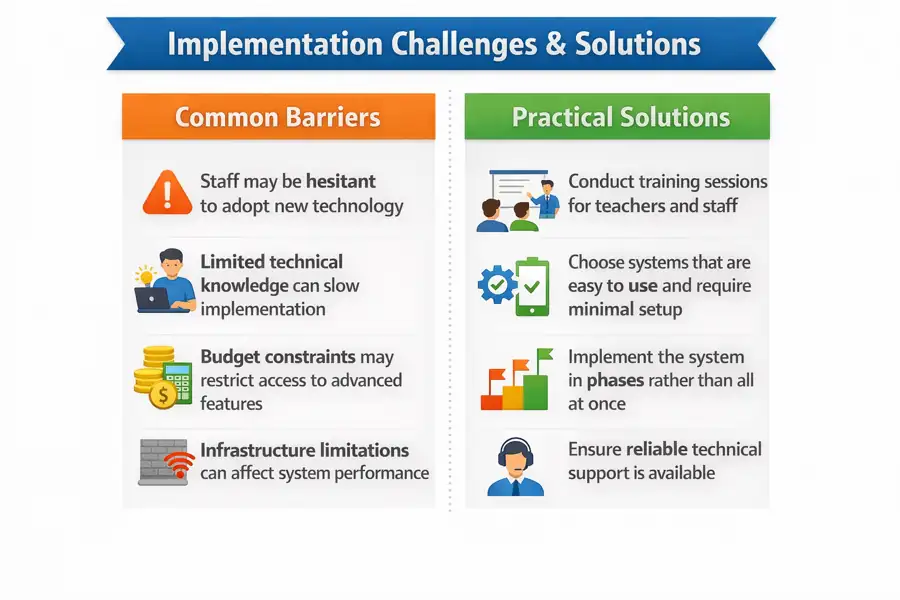
Introducing a new system often comes with challenges. Schools may face resistance or technical issues during the transition.
- Staff may be hesitant to adopt new technology
- Limited technical knowledge can slow implementation
- Budget constraints may restrict access to advanced features
- Infrastructure limitations can affect system performance
Practical Solutions
These challenges can be addressed with a structured approach.
- Conduct training sessions for teachers and staff
- Choose systems that are easy to use and require minimal setup
- Implement the system in phases rather than all at once
- Ensure reliable technical support is available
By addressing these issues early, schools can ensure a smoother transition.
Case Study Example
A mid-sized school in Noida shifted from manual registers to a digital attendance system. The transition was carried out in phases, starting with a pilot program.
Within a few months, the school observed noticeable improvements.
- Administrative workload has been reduced significantly
- Attendance accuracy improved
- Teachers saved time on daily tasks
- Parent communication became more effective
This example highlights how structured implementation can lead to measurable improvements in efficiency and communication.
Advanced Analytics in Attendance Systems
Modern attendance systems provide insights that go beyond basic tracking. Data analytics helps schools understand patterns and make informed decisions.
- Identify students with irregular attendance
- Predict future attendance trends
- Analyze class-wise performance
- Generate detailed reports for evaluation
These insights help schools take proactive steps and improve overall performance.
Role of Automation in Efficiency
Automation is a key advantage of digital attendance systems. It reduces manual effort and ensures consistency in processes.
- Eliminates repetitive tasks
- Speeds up data processing
- Ensures uniform reporting
- Reduces dependency on manual intervention
This leads to better time management and improved operational efficiency.
Customization and Flexibility
Every school has unique requirements. Modern systems provide customization options to meet these needs.
- Custom attendance rules based on schedules
- Flexible report formats
- Role-based access for different users
- Scalable solutions that grow with the institution
This flexibility ensures that the system adapts to changing requirements over time.
Future Trends in Attendance Systems
Attendance management is continuously evolving with advancements in technology. Schools are no longer limited to basic tracking systems; they are gradually adopting smarter and more adaptive solutions that improve accuracy and efficiency.
One of the most significant developments is the use of artificial intelligence. AI-driven systems can analyze attendance patterns and predict potential issues before they become serious concerns.
For example, if a student shows a gradual decline in attendance, the system can highlight it early, allowing teachers to intervene.
Facial recognition technology is also gaining attention as an alternative to biometric systems. It reduces dependency on physical devices and allows faster attendance marking without contact.
This is particularly useful in maintaining hygiene and reducing time during entry processes.
Cloud-based systems will continue to dominate due to their flexibility and scalability. Schools can access data from anywhere, and updates can be implemented without complex installations.
Another important trend is the integration of attendance systems with broader educational platforms.
This allows schools to connect attendance data with academic performance, behavior tracking, and communication tools, creating a more comprehensive management system.
Use Cases Based on School Size
Different schools have different operational needs, and attendance systems must adapt accordingly.
Small Schools
Small institutions usually require simple and cost-effective solutions.
- Basic attendance tracking is sufficient
- Minimal infrastructure is required
- Easy-to-use systems are preferred
Medium-Sized Schools
As the number of students increases, the need for structured systems becomes more important.
- Reporting and analytics features are required
- Parent communication tools become essential
- Multi-user access is necessary
Large Institutions
Large schools and educational groups require advanced solutions.
- Integration with multiple systems is essential
- Advanced analytics helps manage large data sets
- Role-based access ensures better control
Practical Considerations Before Implementation
Before adopting any attendance system, schools should evaluate their requirements carefully.
A well-planned approach ensures long-term success and avoids unnecessary complications.
- Assess infrastructure readiness such as internet connectivity and devices
- Evaluate staff readiness and provide training if needed
- Consider the total number of students and scalability requirements
- Choose a system that balances cost and functionality
Planning these factors in advance helps ensure smooth implementation and better results.
External Perspective on Digital Education
According to UNESCO, digital tools improve efficiency in education systems.
Their research highlights the importance of digital tools in improving efficiency and accessibility in education.
Schools can also integrate attendance systems with payroll tools like HRMS software to manage staff efficiently. For example, businesses in Noida use solutions like ZFour HRMS to streamline attendance and payroll operations.
To explore practical implementations and structured systems, schools can review:
- Check the detailed HR payroll software guide
These resources provide insights into how attendance and management systems function in real-world scenarios.
Conclusion
Attendance management has evolved from simple manual registers to advanced digital systems that offer accuracy, efficiency, and real-time insights.
For schools in Noida, adopting such systems is no longer just an option but a practical step toward better administration.
By implementing structured attendance systems, schools can reduce workload, improve transparency, and create a more disciplined environment.
These systems not only support administrative tasks but also contribute to better student outcomes by enabling timely interventions and improved communication.
As technology continues to evolve, attendance systems will become even more intelligent and integrated, further enhancing their value in educational institutions.
Explore how attendance systems work on the ZFour HRMS platform