HRMS 'Attendance' System: Improve Employee Efficiency & Productivity
In today’s fast-paced business environment, managing employee attendance efficiently is crucial for maintaining productivity and ensuring compliance with labor laws. Traditional attendance tracking methods, such as manual registers and punch cards, are time-consuming, prone to errors, and often lead to payroll discrepancies. This is where an HRMS (Human Resource Management System) with an integrated attendance management module becomes invaluable.
An HRMS attendance management system automates attendance tracking, reduces administrative burdens, and provides real-time insights into workforce patterns. Whether managing remote teams or on-site employees, HRMS attendance solutions help organizations streamline their operations and enhance workforce efficiency.
In this blog, we will explore the significance of attendance management in HRMS, its key features, benefits, and how it contributes to an organization’s overall success.
What is Attendance Management in HRMS?
Attendance management in HRMS refers to the automation of tracking employee work hours, leaves, overtime, and shifts using a centralized digital system. It eliminates the need for manual tracking and ensures accurate timekeeping for payroll processing.
An HRMS attendance system integrates with biometric devices, mobile apps, and GPS-based tracking to record employees’ working hours efficiently. With features such as real-time attendance monitoring, automated reports, and compliance tracking, businesses can ensure accuracy and transparency in workforce management.
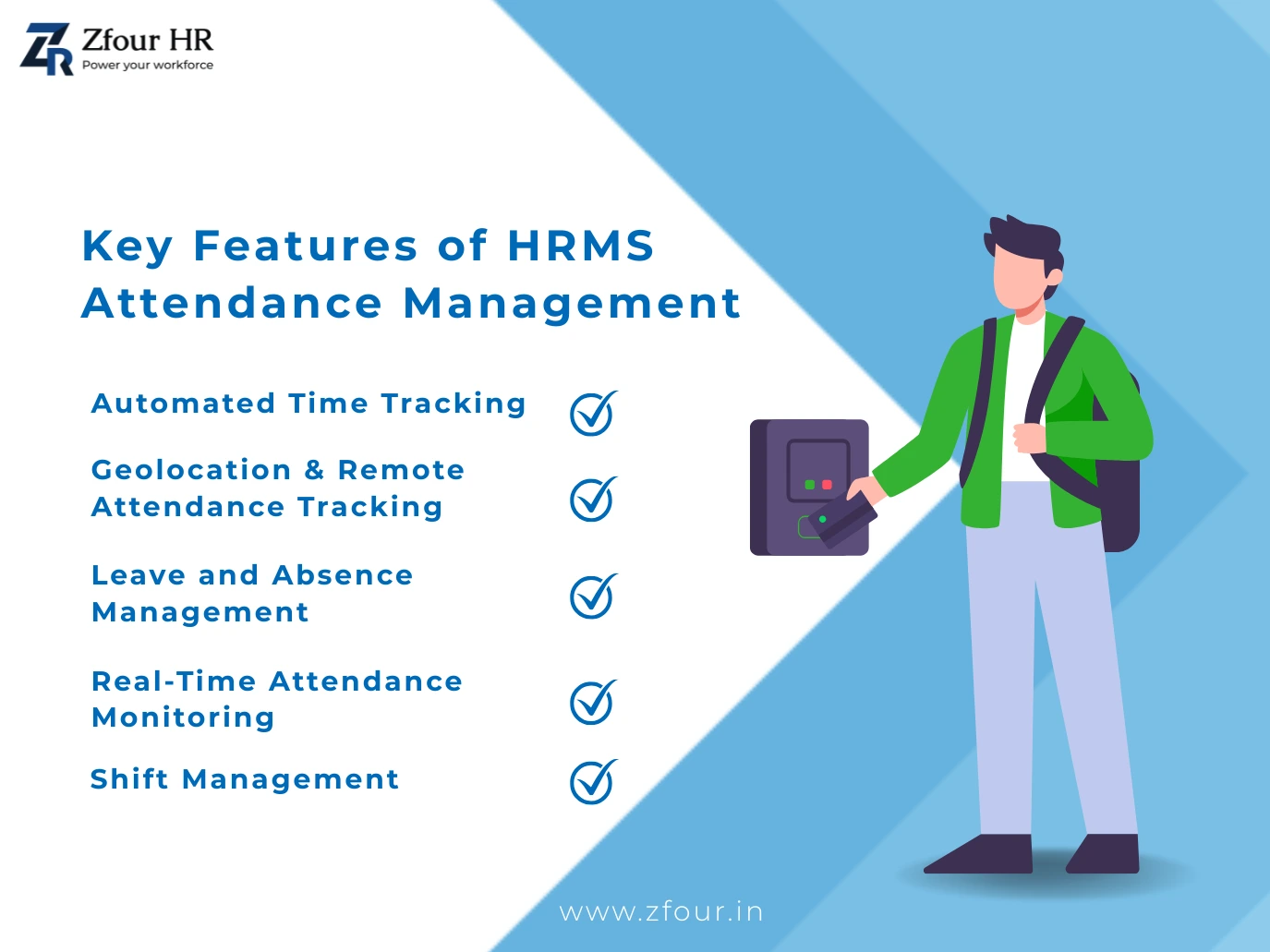
Key Features of HRMS Attendance Management
1. Automated Time Tracking
HRMS attendance management eliminates manual timekeeping by automatically recording employee check-in and check-out times through various modes such as:
- Biometric devices (fingerprint, retina scan)
- RFID and smart cards
- Web-based attendance tracking
- Mobile applications with GPS tracking
2. Shift Management
Organizations with multiple shifts can create, manage, and assign shifts to employees efficiently. The system automatically updates shift schedules, ensuring proper workforce allocation and preventing conflicts.
3. Leave and Absence Management
Employees can apply for leave through the HRMS portal, and managers can approve or reject requests in real time. The system maintains records of:
- Paid leaves (PL)
- Sick leaves (SL)
- Casual leaves (CL)
- Unpaid leaves (UL)
- Leave balances and carry-forward policies.
4. Real-Time Attendance Monitoring
Managers can track real-time employee attendance, late arrivals, early departures, and absences using a dashboard with detailed insights.
5. Geolocation & Remote Attendance Tracking
With the rise of remote work and field employees, HRMS attendance systems integrate GPS-based tracking to monitor employee locations when marking attendance. This is useful for sales teams, delivery personnel, and remote workers.
6. Payroll Integration
Accurate attendance tracking ensures error-free payroll processing by automatically calculating:
- Working hours
- Overtime hours
- Dedications for late arrivals/absences
- Leave encashment
7. Compliance and Labor Law Adherence
The system ensures compliance with government labor laws, overtime policies, and attendance regulations, helping businesses avoid legal penalties.
8. Automated Reports and Analytics
HRMS generates detailed attendance reports, providing insights into:
- Employee punctuality
- Absenteeism trends
- Shift adherence
- Work productivity
Benefits of Attendance Management in HRMS
1. Eliminates Manual Errors
Automating attendance management eliminates errors caused by manual data entry, such as incorrect time records, misplaced attendance sheets, and fraudulent entries.
2. Saves Time and Increases Efficiency
HR teams no longer have to manually track attendance and process payroll. The system automatically updates records, freeing HR personnel to focus on strategic initiatives.
3. Reduces Payroll Discrepancies
Incorrect attendance tracking can lead to salary disputes and dissatisfaction among employees. HRMS attendance management ensures accurate salary calculations based on actual working hours.
4. Enhances Employee Productivity
When employees know that attendance is being tracked accurately, it reduces late arrivals and absenteeism, leading to increased productivity and discipline.
5. Supports Remote Work and Hybrid Models
With more companies adopting remote and hybrid work models, GPS-based tracking and online attendance marking allow businesses to manage a distributed workforce seamlessly.
6. Boosts Transparency and Employee Trust
Employees can access their attendance records, leave balances, and overtime reports in real time. This enhances trust and transparency in workplace policies.
7. Strengthens Compliance and Legal Adherence
HRMS attendance management ensures organizations comply with labor laws, minimum working hours, overtime regulations, and leave policies.
8. Data Security and Centralized Records
HRMS attendance data is stored securely in a centralized system, preventing data loss and unauthorized modifications.
How to Choose the Right HRMS Attendance Management System?
1. Identify Your Business Needs
Determine whether your company needs basic attendance tracking or advanced features like biometric integration, shift management, or geolocation tracking.
2. Check Integration Capabilities
Ensure the HRMS integrates with:
- Payroll processing systems
- Leave and performance management modules.
- Existing biometric devices and mobile apps
3. Mobile Accessibility
Look for mobile-friendly HRMS solutions that allow employees to mark attendance on the go, especially for remote or field workers.
4. User-Friendly Interface
An intuitive dashboard with easy navigation helps HR teams and employees use the system efficiently.
5. Compliance and Security Features
Choose an HRMS that supports labor law compliance, data encryption, and access control for secure data management.
6. Scalability
Ensure the system can accommodate business growth, whether you expand operations or hire more employees.
Future Trends in HRMS Attendance Management
With rapid technological advancements, HRMS attendance management is evolving. Some emerging trends include:
1. AI-Powered Attendance Analytics
AI-driven insights will help organizations predict absenteeism patterns, employee engagement levels, and workforce productivity.
2. Cloud-Based HRMS
More companies are adopting cloud-based HRMS for real-time attendance tracking across multiple locations.
3. Facial Recognition and Biometric Advancements
Face recognition technology will become more common, eliminating the need for manual check-ins.
4. Integration with Wearable Devices
Smartwatches and wearables may soon be used to track employee movements and attendance.
5. Blockchain for Secure Attendance Data
Blockchain technology can enhance attendance record security and prevent data tampering.
Conclusion
Implementing an HRMS attendance management system is no longer a luxury but a necessity for businesses striving for accuracy, efficiency, and compliance. By automating attendance tracking, companies can reduce payroll errors, boost employee productivity, and ensure compliance with labor laws.
If your organization is still relying on outdated attendance tracking methods, it’s time to embrace digital transformation with a robust HRMS attendance management system. The future of workforce management is automated, transparent, and data-driven—make sure your company stays ahead of the curve!
Need an Efficient HRMS Attendance System?
Explore our HRMS solutions, Zfour, to streamline attendance tracking, payroll processing, and workforce management seamlessly.